
Articles
Every articles on Job Scout Wise.

What It's Really Like to Work as a Flight Attendant
Working as a flight attendant means being trained and federally certified for emergencies first, and serving passengers second. The typical entry-level education is a high school diploma or equivalent (U.S. Bureau of Labor Statistics, 2025), airlines train you themselves for several weeks to a few months, and the median annual wage was $63,580 in May 2025 (U.S. Bureau of Labor Statistics).
Priya Chandrasekaran · 9 min read
How to Become a Personal Trainer
To become a personal trainer in the United States, you normally need a personal training certification and a current CPR/AED credential before an employer will let you work with clients. The U.S. Bureau of Labor Statistics notes that personal trainers usually must be certified before they begin working with clients or gym members, and that most trainers or instructors also need certification in CPR and first aid and in the use of an AED (U.S. Bureau of Labor Statistics, 2026-08-27).
Priya Chandrasekaran · 10 min read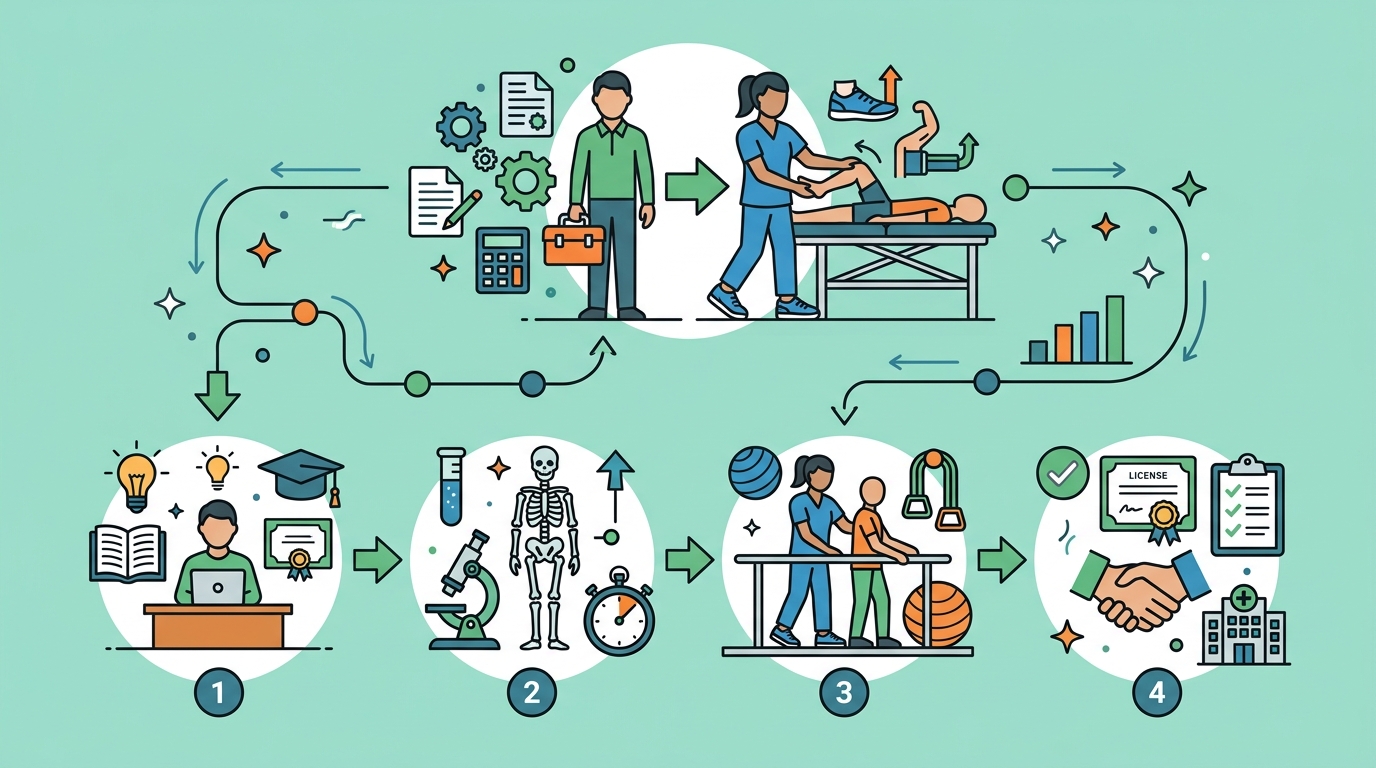
How to Switch Careers to Physical Therapy Assisting
There is no no-degree route to working as a physical therapist assistant. All states require PTAs to hold an associate's degree from an accredited program and to be licensed or certified, which normally means graduating from a CAPTE-accredited program and passing a qualifying exam (U.S. Bureau of Labor Statistics, 2025).
Wyatt Holloway · 9 min read
Welder Cover Letter: Examples and How to Write One
A welder cover letter has one job: tie the processes, positions and certifications on your resume to the work in the posting, in about 200 to 400 words across three or four short paragraphs (CareerOneStop, U.S. Department of Labor). Name the process — MIG, TIG, stick, flux-cored — the positions you weld in, your material and thickness range, and the certification record behind it.
Desmond Okafor · 8 min read
Welder vs. Electrician Salary: Which Pays More?
Electricians earn more on average. The median annual wage for electricians was $63,190 in May 2025, compared with $53,750 for welders, cutters, solderers and brazers (U.S. Bureau of Labor Statistics, 2025).
Marisol Tanaka-Reyes · 8 min read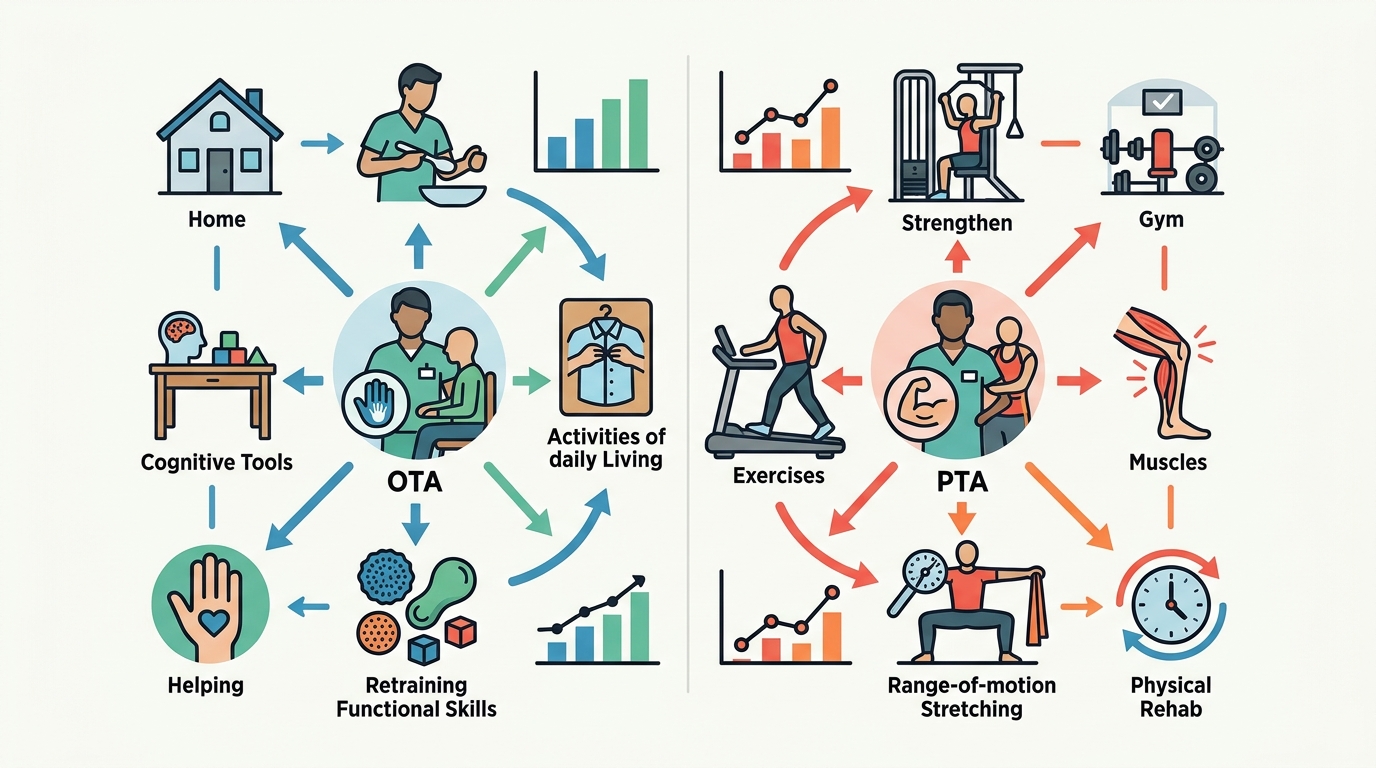
Occupational Therapy Assistant vs. Physical Therapist Assistant: Which Career Path Is Right for You?
Occupational therapy assistants (OTAs) help people regain the ability to do everyday tasks — dressing, cooking, handwriting, play. Physical therapist assistants (PTAs) carry out treatment plans aimed at movement, strength and pain. Both are associate-degree roles with licensing exams, both involve a lot of standing and lifting, and both pay similarly at the national median: $72,300 for occupational therapy assistants and $68,380 for physical therapist assistants in May 2025, according to the U.S. Bureau of Labor Statistics (2025).
Marisol Tanaka-Reyes · 9 min read
Bank Teller Interview Questions: What to Expect and How to Prepare
A bank teller interview is usually short, structured and heavy on scenarios: how you count and balance cash, how you verify who someone is, what you say to a customer who is angry about a hold, and what you do when a request looks like an attempt to dodge reporting rules. Interviews consistently cover cash handling accuracy, fraud detection, difficult customers, stress during peak periods and anti-money-laundering awareness, and most include at least two behavioral questions that expect a STAR answer (Final Round AI, undated).
Wyatt Holloway · 9 min read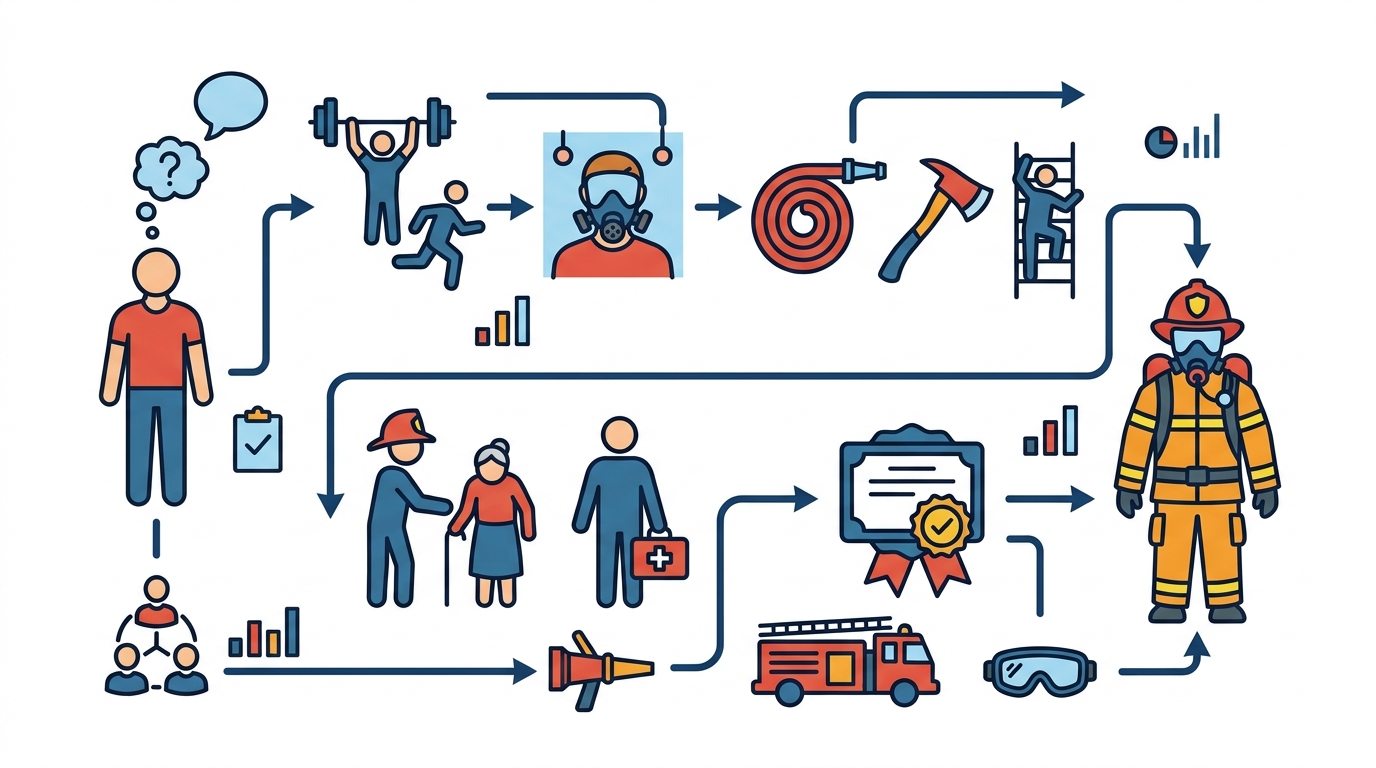
How to Become a Firefighter With No Experience
You do not need a college degree to be hired as a firefighter. The U.S. Bureau of Labor Statistics reports that firefighters typically need a high school diploma plus training in emergency medical services, with entry-level education listed as a postsecondary nondegree award and no prior work experience in a related occupation required (U.S. Bureau of Labor Statistics, 2025).
Priya Chandrasekaran · 9 min read
Medical Coder Pay: Average Salary, Range, and What Affects It
Medical coders translate clinical documentation into billing codes, and their pay sits in the middle of the allied health range: the median annual wage for medical records specialists, the occupational category that includes coders, was $51,140 (U.S. Bureau of Labor Statistics, 2025). Earnings move with certification, years in the chair, the type of employer, and the state you work in.
Marisol Tanaka-Reyes · 9 min read
How to Prepare for a Dental Hygienist Interview
Preparing for a dental hygienist interview means two jobs at once: proving you can scale, chart and educate patients safely, and proving your paperwork is in order. Most practices will want to see your licence status, confirm you graduated from a programme accredited by the Commission on Dental Accreditation, and watch how you talk to patients — often in a working interview where you treat real people.
Priya Chandrasekaran · 6 min read
How to Prepare for a Warehouse Job Interview
Warehouse interviews are usually short and practical. They test whether you can do the physical work safely, whether you show up on time, and whether you can follow a process without being chased.
Wyatt Holloway · 6 min read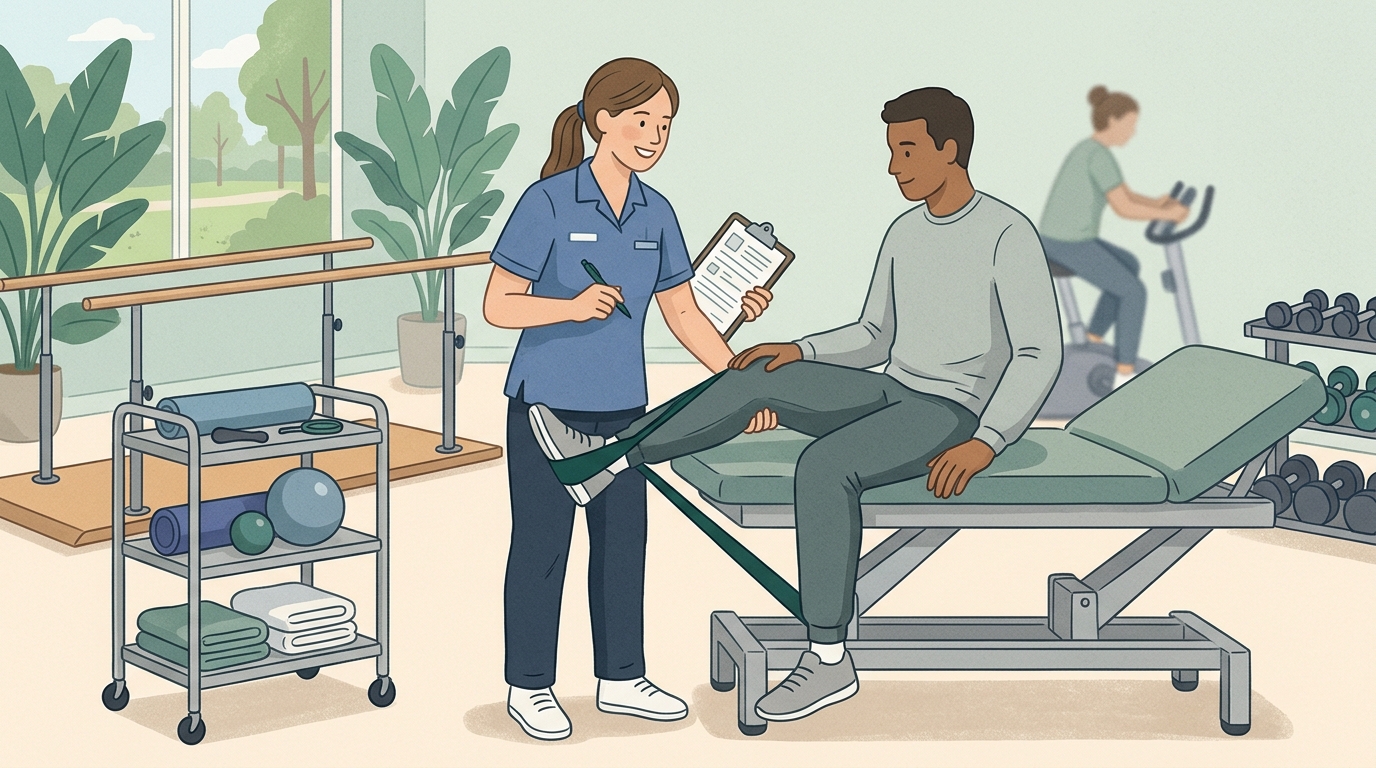
What Does a Physical Therapist Assistant Do? Duties, Skills, and Salary Explained
A physical therapist assistant (PTA) delivers hands-on treatment — exercise, massage, stretching, and gait and balance training — under the direction and supervision of a physical therapist, and records how each patient responds (U.S. Bureau of Labor Statistics, 2025). Most PTAs work in physical therapists' offices or hospitals and are on their feet for much of the day setting up equipment and helping patients move (U.S. Bureau of Labor Statistics, 2025).
Marisol Tanaka-Reyes · 9 min read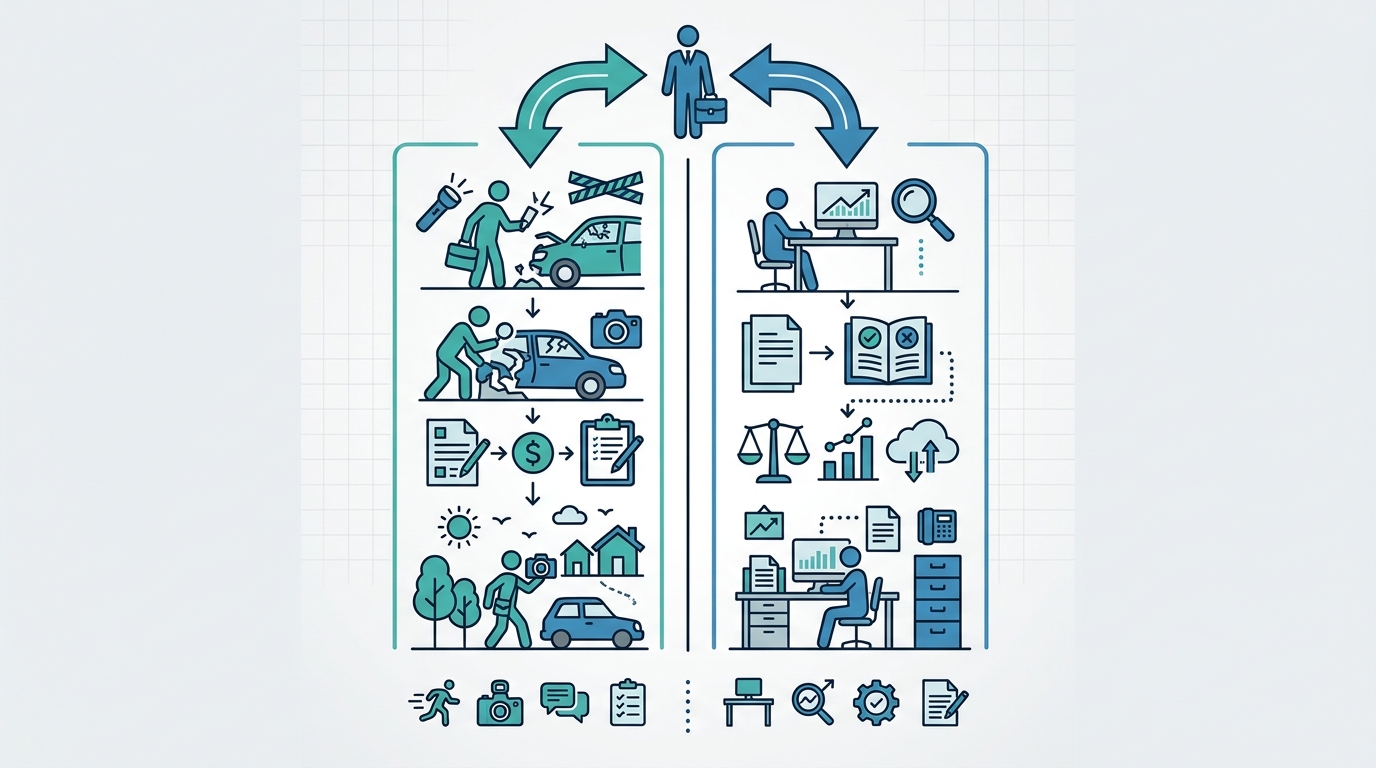
Claims Adjuster vs. Underwriter: A Second-Career Comparison
Claims adjusting and underwriting sit on opposite sides of the same insurance policy, and they suit different career changers. Adjusting is usually the faster door to walk through — a high school diploma or equivalent is typically enough for entry-level work, though some roles want a bachelor's degree or insurance-related experience (U.S. Bureau of Labor Statistics, 2025). Underwriting typically asks for a bachelor's degree and pays a higher median wage.
Priya Chandrasekaran · 8 min read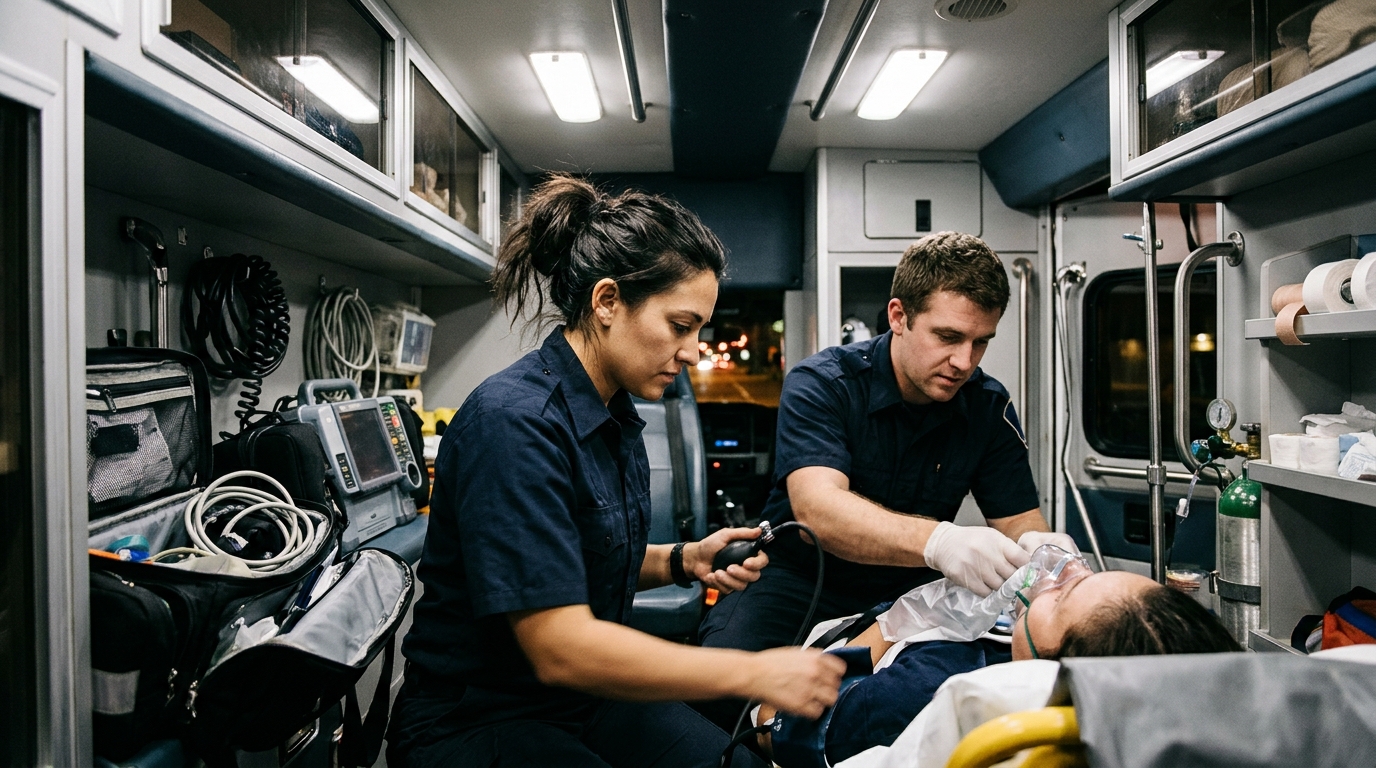
How to Get Your EMT Certification
EMT certification has two layers: national certification from the National Registry of Emergency Medical Technicians (NREMT), and a state license that actually lets you work on an ambulance. The national credential requires a state-approved EMT course meeting the National EMS Education Standards, a passing result on the National Registry EMT certification examination, and a BLS skills competency requirement approved by your State EMS Office (National Registry of Emergency Medical Technicians, undated).
Wyatt Holloway · 9 min read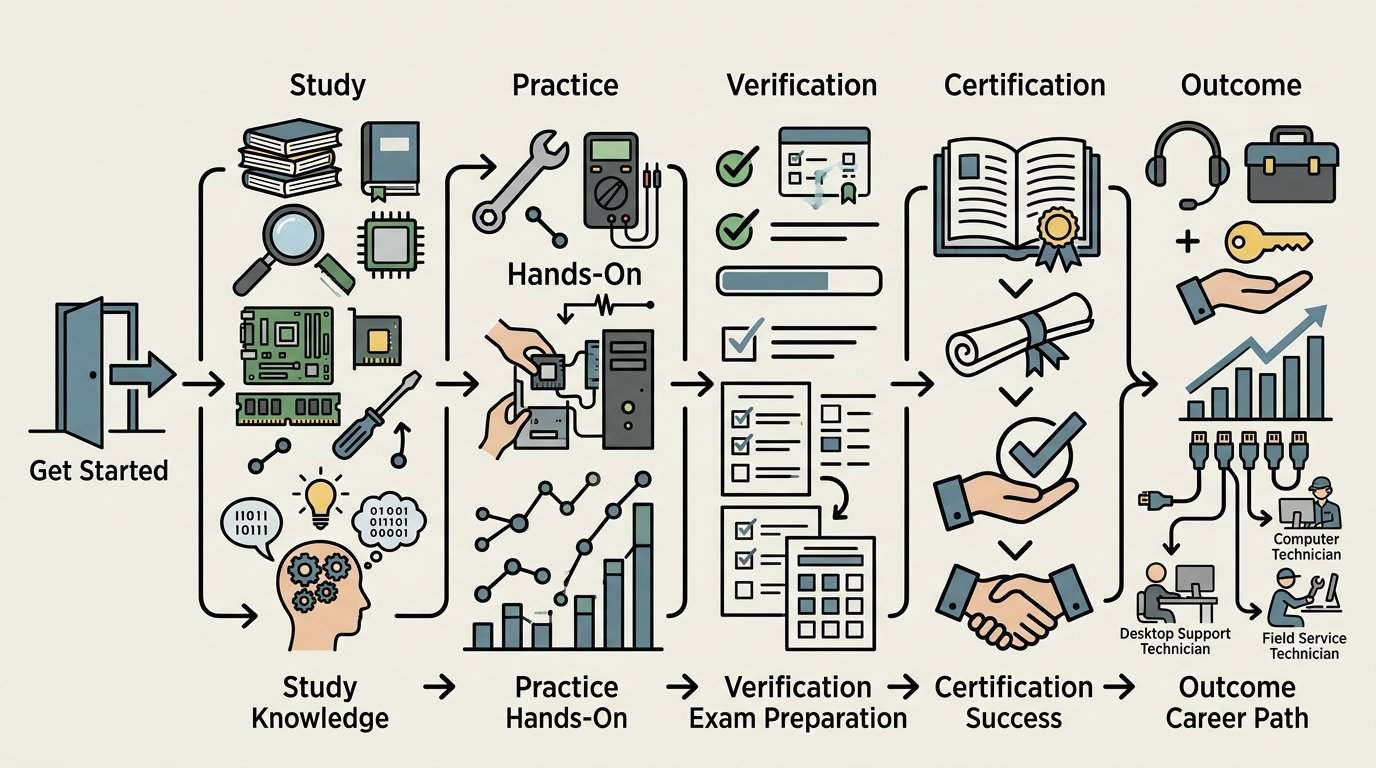
How to Get Your CompTIA A+ Certification
CompTIA A+ is a vendor-neutral certification for entry-level IT support work, earned by passing two exams — Core 1 and Core 2 — delivered through Pearson VUE. There is no degree, training course or work-experience requirement to sit them; anyone can create a CompTIA account, buy a voucher and schedule a test date.
Noor Abdallah · 9 min read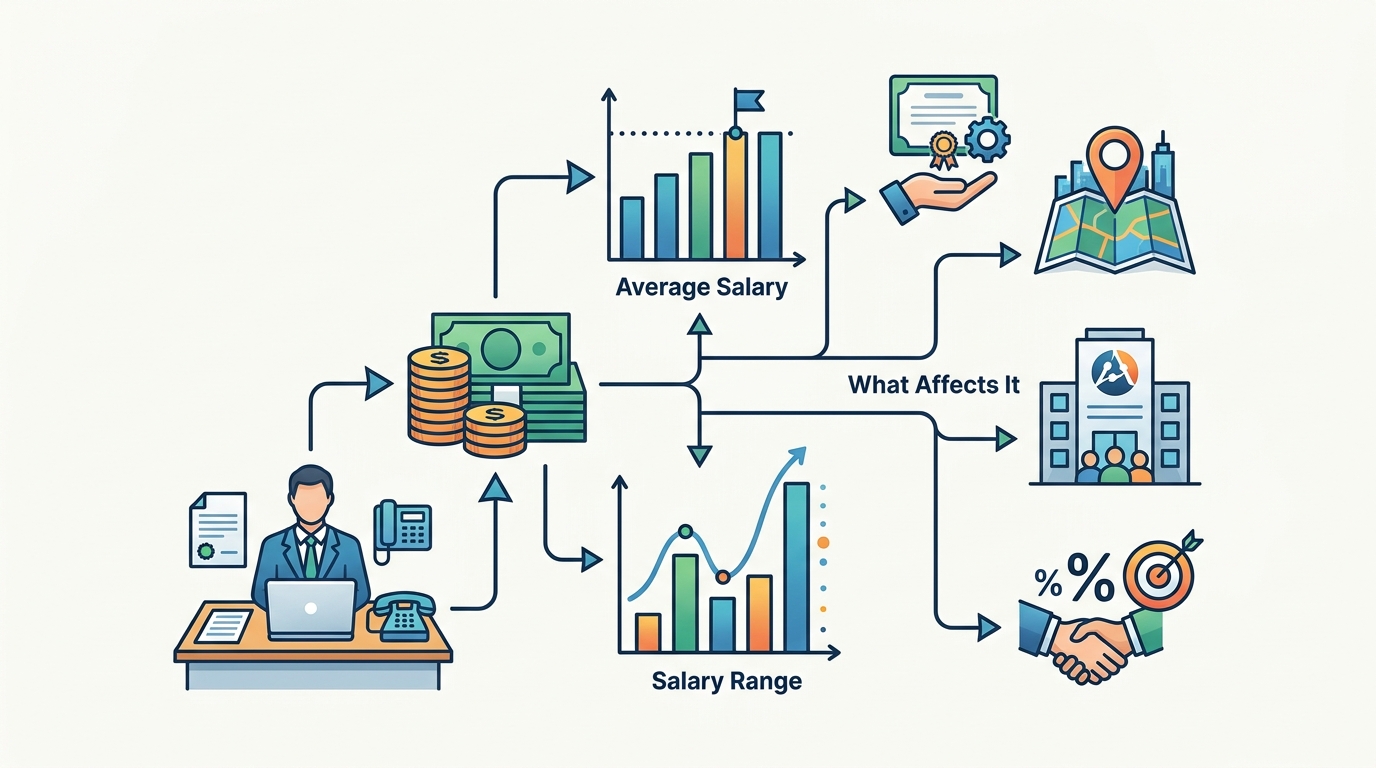
Insurance Agent Pay: Average Salary, Range, and What Affects It
Insurance sales agents are paid in one of three common ways: commission only, salary only, or salary plus commission or bonus (U.S. Bureau of Labor Statistics, 2025). The Bureau of Labor Statistics publishes a national median annual wage for the occupation each year, and in its 2025 figures the highest-paid 10 percent of insurance sales agents earned more than $138,140, while the lowest-paid 10 percent earned less than the bottom-decile figure BLS lists alongside it.
Wyatt Holloway · 10 min read
Bookkeeper Salary: What to Expect by Experience and Location
Bookkeeping, accounting, and auditing clerks earned a median annual wage of $50,670 in May 2025, according to the U.S. Bureau of Labor Statistics (2025) — meaning half the occupation earned more and half earned less. The spread is large: ONET OnLine (2025) reports that the lowest-paid 10 percent earn $36,000 a year or less, while the top 10 percent earn $74,550 or more.
Priya Chandrasekaran · 11 min read
How to Become a Licensed Esthetician
To work as an esthetician you complete a state-approved esthetics or cosmetology program and then pass a state licensing exam — a requirement in every state except Connecticut (U.S. Bureau of Labor Statistics, undated). Most states test you twice: a written theory exam, often the National Esthetics Theory Examination developed by the National-Interstate Council of State Boards of Cosmetology, and a hands-on practical covering facials, waxing and makeup.
Marisol Tanaka-Reyes · 8 min read
CNA Resume Tips (With Examples)
A strong CNA resume does three things fast: it proves your certification is current and that you are listed on your state registry, it names the patient-care tasks you can carry out on a shift, and it puts numbers on your patient load. Nursing assistants often need a state-issued license or certification and must pass a competency exam after an approved program, and those who pass are placed on a state registry — required to work in a nursing home (U.S. Bureau of Labor Statistics, 2025).
Marisol Tanaka-Reyes · 8 min read
What Does a Bank Teller Do? A Day in the Life
A bank teller handles routine money transactions at the counter of a bank or credit union — cashing checks, taking deposits, answering account questions and recording each transaction electronically (U.S. Bureau of Labor Statistics, 2026-08-27). The day is built around a cash drawer you count at the start of your shift and balance again before you leave.
Priya Chandrasekaran · 8 min read
What Does a Medical Assistant Do? A Day in the Life
A medical assistant handles both clinical and administrative work in a healthcare practice — taking vital signs, recording medical histories, scheduling appointments and keeping records accurate (U.S. Bureau of Labor Statistics, 2025). Most work in physicians' offices, hospitals and outpatient clinics, usually full time, with evening, weekend or holiday shifts where the facility is open around the clock (U.S. Bureau of Labor Statistics, 2025).
Marisol Tanaka-Reyes · 8 min read
Welder Pay: Average Salary, Range, and What Affects It
Welders, cutters, solderers and brazers had a median annual wage of $53,750 in May 2025 (U.S. Bureau of Labor Statistics, 2025). The spread around that midpoint is wide: the lowest-paid 10 percent earned less than $39,240 a year and the highest-paid 10 percent earned more than $77,530 (U.S. Bureau of Labor Statistics, 2025).
Desmond Okafor · 9 min read
How to Become a Nurse Practitioner
Becoming a nurse practitioner means stacking three credentials in sequence: a registered nurse license, a graduate degree in an advanced practice nursing role, and a national certification exam, after which your state board grants you an APRN license. The U.S. Bureau of Labor Statistics (2025) lists a master's degree as the entry-level education for this occupation group and states that nurse practitioners must be licensed in their state and pass a national certification exam.
Desmond Okafor · 10 min read
Dental Assistant Interview Questions: What to Expect and How to Prepare
A dental assistant interview is rarely one conversation. Expect a short phone screen with the office manager, an in-person round with the dentist, and in many practices a working interview where you set up trays and pass instruments while someone watches your hands.
Noor Abdallah · 8 min read
CNA vs. Medical Assistant Salary: Which Pays More?
Medical assistants earned a median annual wage of $45,690 in May 2025, while nursing assistants earned a median of $42,260 (U.S. Bureau of Labor Statistics, 2025). Medical assistants pay more on average nationally, but the spread inside each job is wider than the gap between them.
Noor Abdallah · 8 min read
Medical Coder vs. Medical Biller: Which Career Fits You?
Medical coding and medical billing are two halves of the same revenue cycle, and federal statistics treat them as one job. Both titles sit inside the occupation BLS calls "Medical Records Specialists" (SOC 29-2072), whose scope note says it "Includes medical coders" — there is no separate BLS or ONET occupation titled "medical biller" (ONET OnLine, undated).
Marisol Tanaka-Reyes · 7 min read
Web Developer vs. Software Developer: Which Career Fits You?
Web developers build and maintain websites — writing code in languages such as HTML or XML, creating and testing navigation menus, and integrating graphics, audio and video (U.S. Bureau of Labor Statistics, undated). Software developers design computer applications or programs, working further from the browser and closer to the system behind it (U.S. Bureau of Labor Statistics, undated).
Noor Abdallah · 7 min read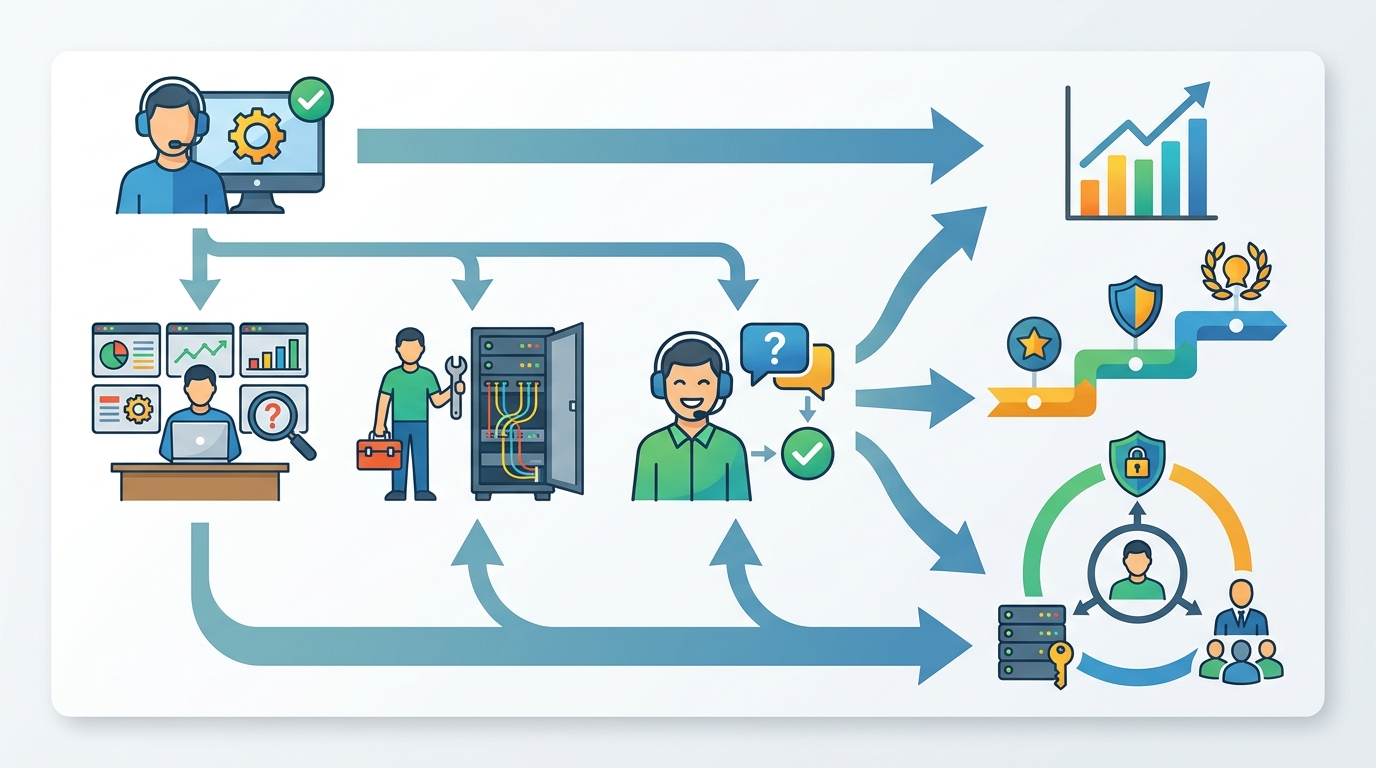
IT Support Specialist Career Overview: Is This the Right Path for You?
IT support specialists keep other people's technology working: diagnosing problems, setting up equipment, walking users through fixes, and maintaining the networks everything runs on. The U.S. Bureau of Labor Statistics (2025) splits the work into two groups — computer user support specialists, often called help-desk technicians, and computer network support specialists — and they differ in entry requirements and pay.
Desmond Okafor · 9 min read
How to Become an IT Support Specialist
"IT support specialist" is an alternate job title that the Bureau of Labor Statistics files under computer support specialists (U.S. Bureau of Labor Statistics, undated). There is no single required degree: network support specialists typically need an associate's degree and user support specialists typically need some college courses, but candidates for either role may qualify with a high school diploma plus relevant IT certifications (U.S. Bureau of Labor Statistics, undated).
Priya Chandrasekaran · 9 min read
How to Prepare for a Truck Driver Interview
A truck driver interview is really two interviews at once: a conversation about how you drive, and a document check against the file the carrier is legally required to keep on you. Prepare for both by assembling copies of your CDL, medical card and driving record before you walk in, and by practising short, specific answers about hours of service, trip planning and your safety history.
Desmond Okafor · 7 min read
Switching Careers to Flight Attendant: What You Need to Know
Switching into flight attendant work later in your career is realistic: airlines hire on customer service experience rather than degrees, and training is provided after you are hired. The U.S. Bureau of Labor Statistics (2025) reports flight attendants typically need a high school diploma or equivalent plus one or two years of service work in restaurants, hotels or resorts, with initial airline training lasting several weeks to a few months.
Wyatt Holloway · 9 min read
How to Become a Personal Trainer Without a Degree
You do not need a college degree to work as a personal trainer. Fitness trainers and instructors typically need only a high school diploma to enter the occupation (U.S. Bureau of Labor Statistics, 2025), and what employers screen for is a current certification from an accredited body such as NASM, ACE or the NCCPT, plus proof you can coach a real person safely.
Desmond Okafor · 8 min read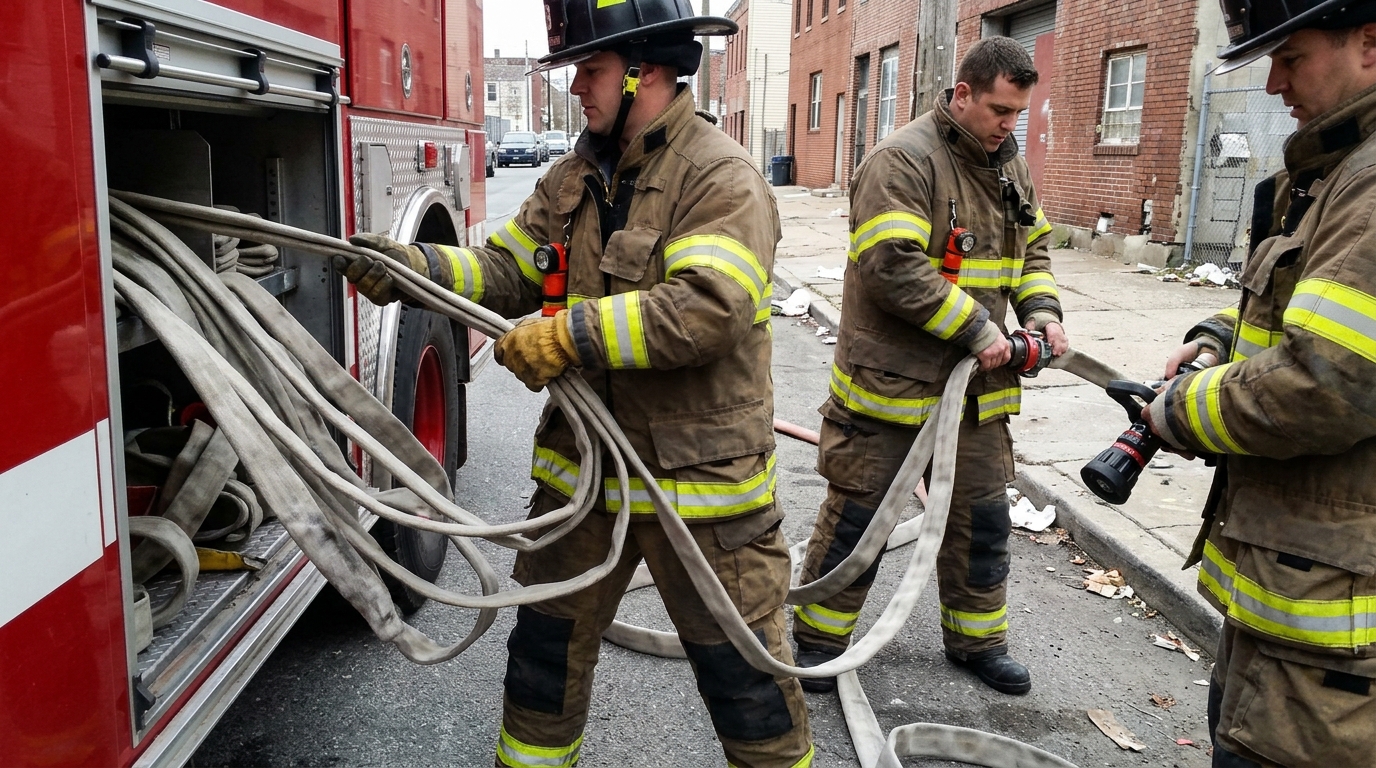
How to Become a Firefighter
Becoming a firefighter is less about one diploma and more about clearing a sequence of gates: a high school diploma or equivalent, emergency medical training, a competitive department hiring process with written and physical testing, and then a few months at a fire academy followed by a probationary period (U.S. Bureau of Labor Statistics, 2025). Most candidates spend somewhere between one and three years from starting EMT training to being sworn in, because hiring cycles open on a department's schedule, not yours.
Noor Abdallah · 10 min read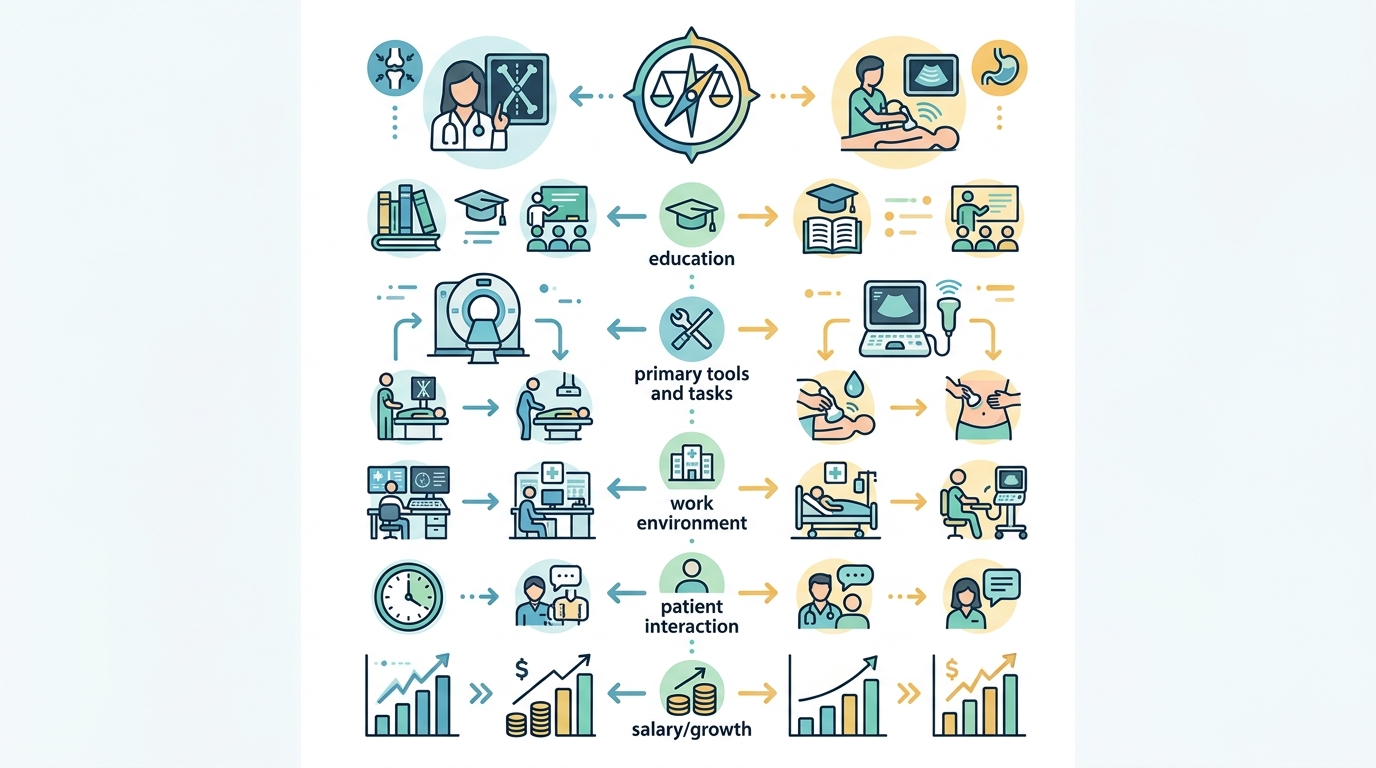
Radiologic Technologist vs. Ultrasound Technician: Pay, Duties, and Day-to-Day Differences
Radiologic technologists and ultrasound technicians (formally, diagnostic medical sonographers) both produce the images doctors read, but they use different physics, different body mechanics and often different schedules. Radiography is fast, protocol-driven and uses ionizing radiation; sonography is slower, hands-on and asks you to find the diagnostic image yourself while the patient lies in front of you.
Wyatt Holloway · 9 min read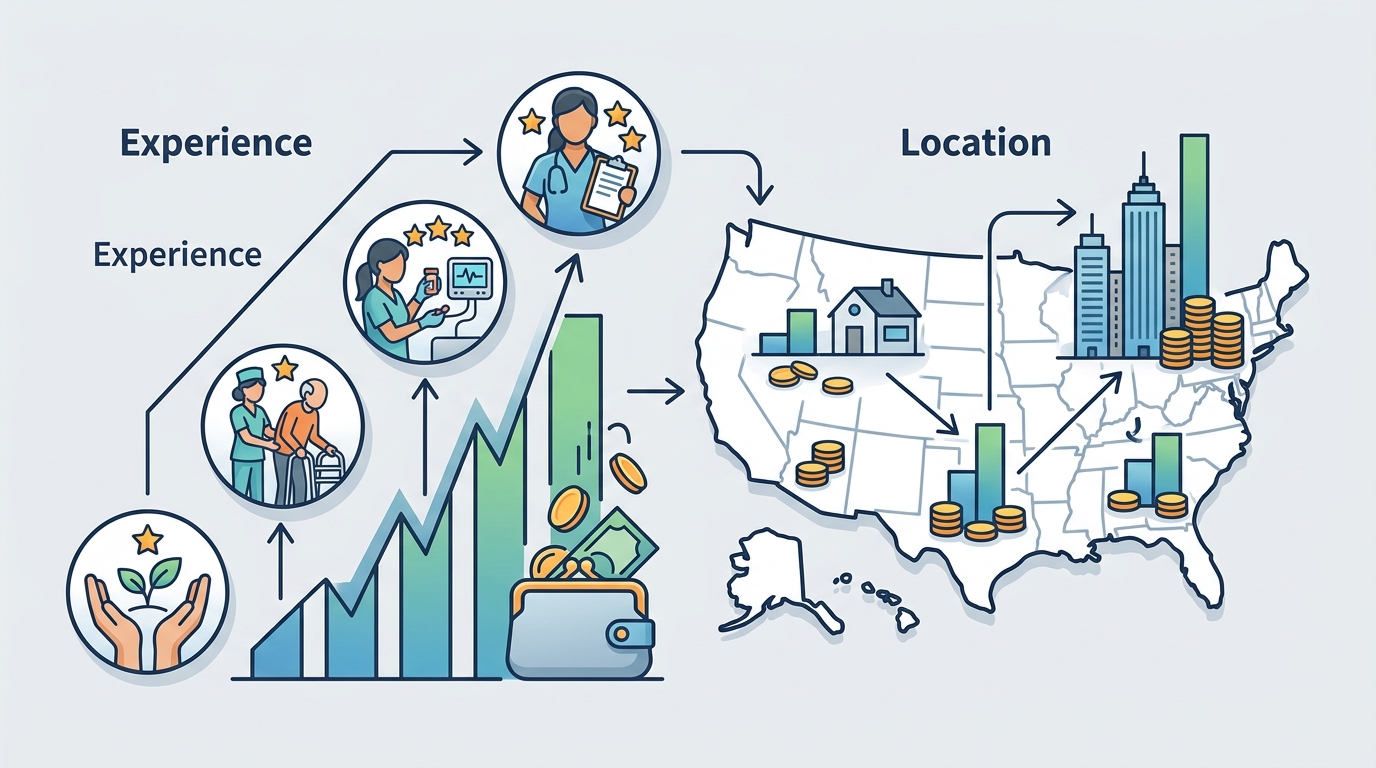
CNA Salary: What to Expect by Experience and Location
Certified nursing assistant pay is measured and published every year, so you do not have to guess. The U.S. Bureau of Labor Statistics reports a median annual wage for nursing assistants in its May 2025 wage release, a separate median for orderlies, and a combined "nursing assistants and orderlies" median in its 2025 Occupational Outlook Handbook. ONET OnLine and CareerOneStop republish the same underlying data by state, with 10th- and 90th-percentile figures alongside the median.
Noor Abdallah · 9 min read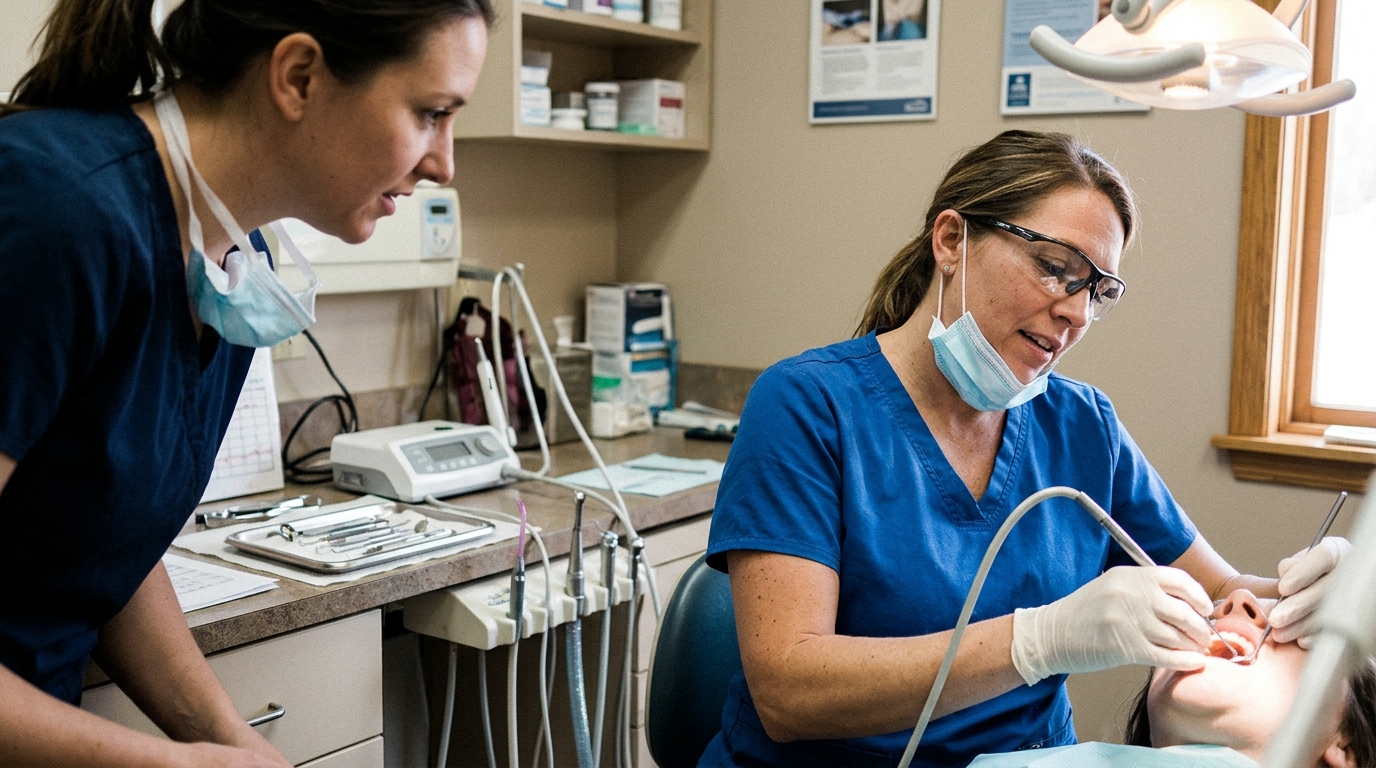
How to Negotiate a Higher Salary as a Dental Hygienist
Negotiating as a dental hygienist works differently from most office jobs: many hygienists are paid hourly or per diem, raises are often decided by one owner-dentist rather than an HR system, and the rate in your own metro matters more than any national average. The way to win the conversation is to arrive with three things — a printed wage range for your area, a written list of what you produce for the practice, and one target number you can say out loud without flinching.
Priya Chandrasekaran · 9 min read
Negotiating Pay in Healthcare: What Actually Works
Pay negotiation in healthcare works best as a budget conversation, not a personal one. Healthcare services averaged a 3.0% merit increase and a 3.3% total pay increase (WorldatWork, Workspan Daily, March 2026), so anything above that usually has to be justified by market data or by a job that has genuinely expanded. Your preparation — a printed local wage range, a list of quantified accomplishments and one target number — matters more than how confidently you ask.
Wyatt Holloway · 9 min read
So You Want to Become a Financial Advisor After 30
Becoming a financial advisor in your thirties, forties or fifties is a normal route into the job. The U.S. Bureau of Labor Statistics (2025) says typical entry-level education is a bachelor's degree in no particular field, and that work experience in a related occupation is not typically required — what is required is long-term on-the-job training under senior advisors, usually lasting more than a year.
Desmond Okafor · 10 min read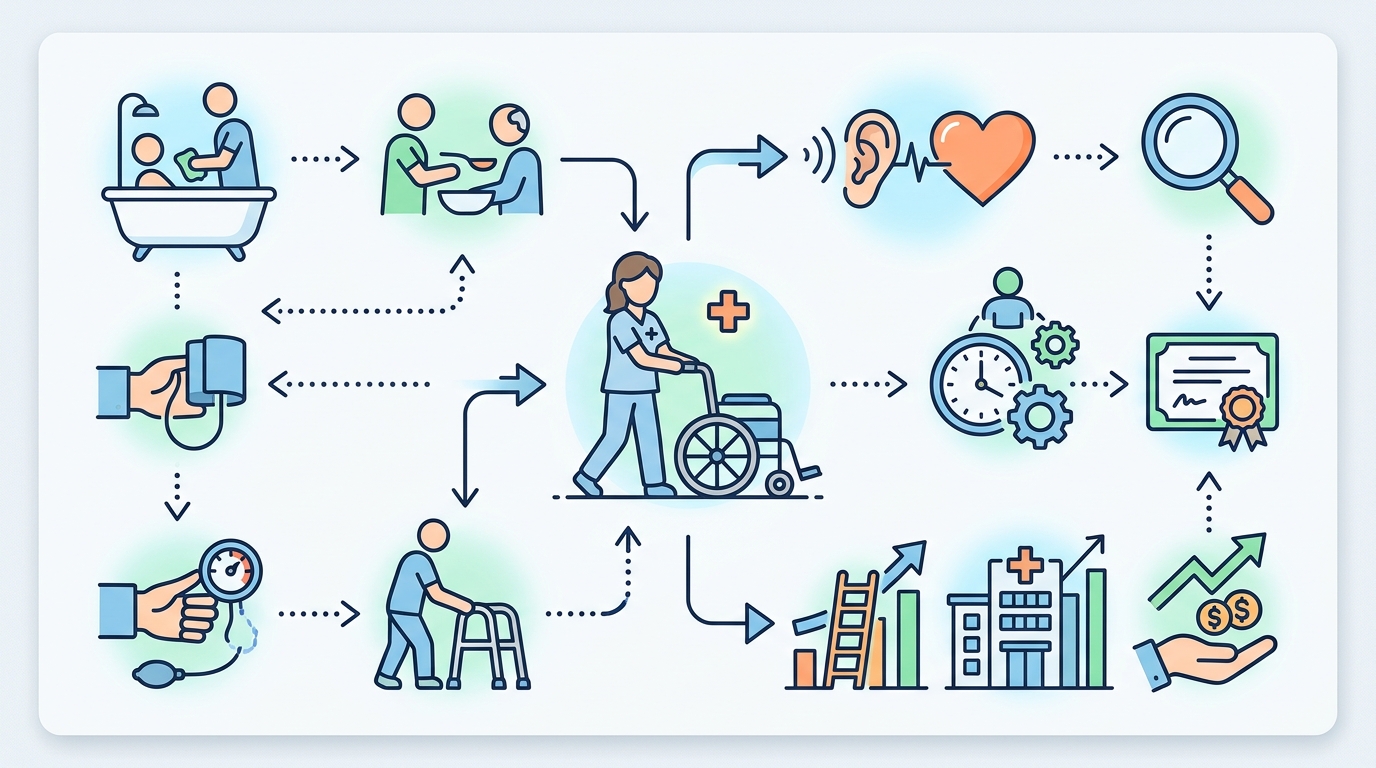
What Does a CNA Do? Duties, Skills, and Salary
A certified nursing assistant (CNA) provides hands-on daily care to patients and residents under the supervision of a licensed nurse: bathing, toileting, feeding, moving people safely, taking vital signs and reporting changes. Most work in skilled nursing facilities, which the U.S. Bureau of Labor Statistics (2025) lists as the largest employer of nursing assistants, followed by hospitals.
Desmond Okafor · 9 min read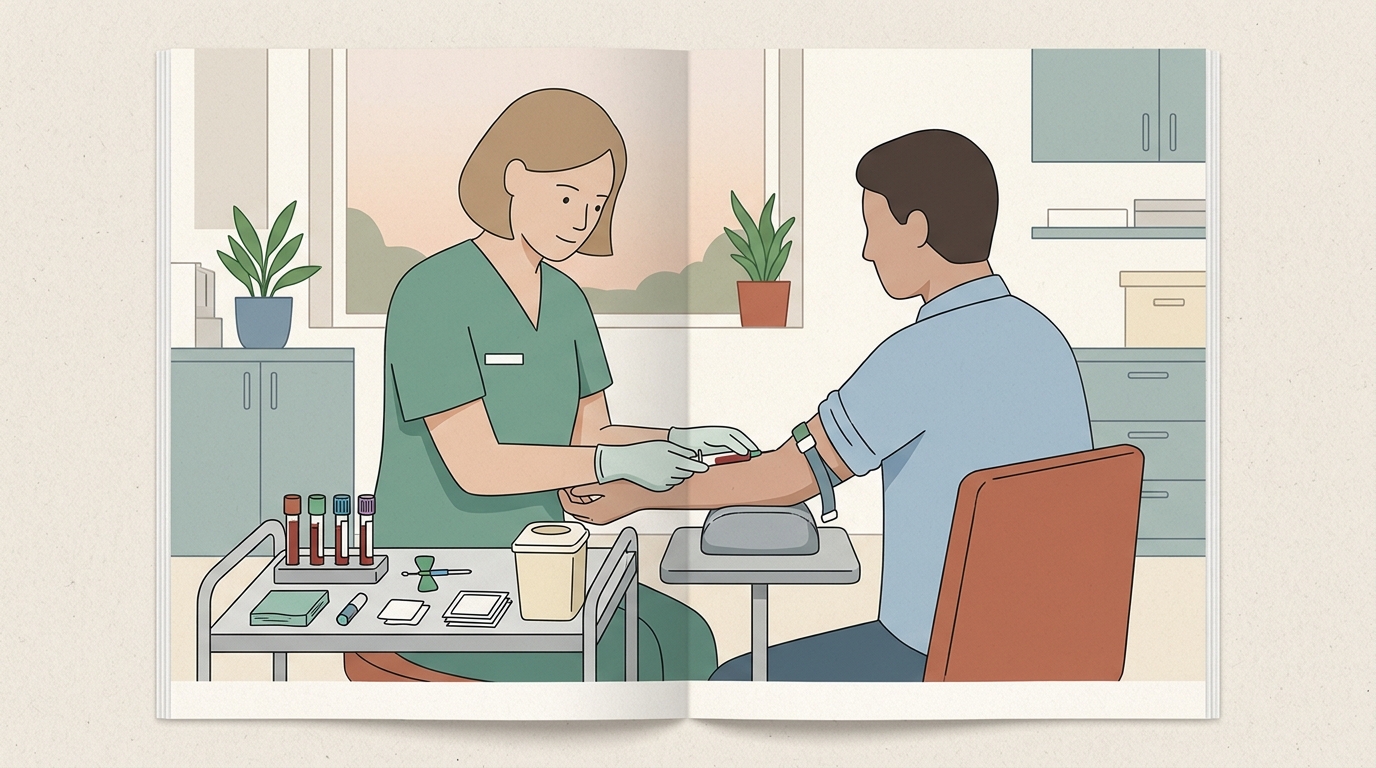
Phlebotomist Interview Questions: What to Expect and How to Prepare
A phlebotomy interview is usually short, practical and focused on safety: how you confirm identity, how you label specimens, how you handle a fearful patient or a failed stick. Expect behavioral questions tied to real draws you have done, plus technical checks on order of draw, tube additives and what you do when a patient reacts badly.
Marisol Tanaka-Reyes · 8 min read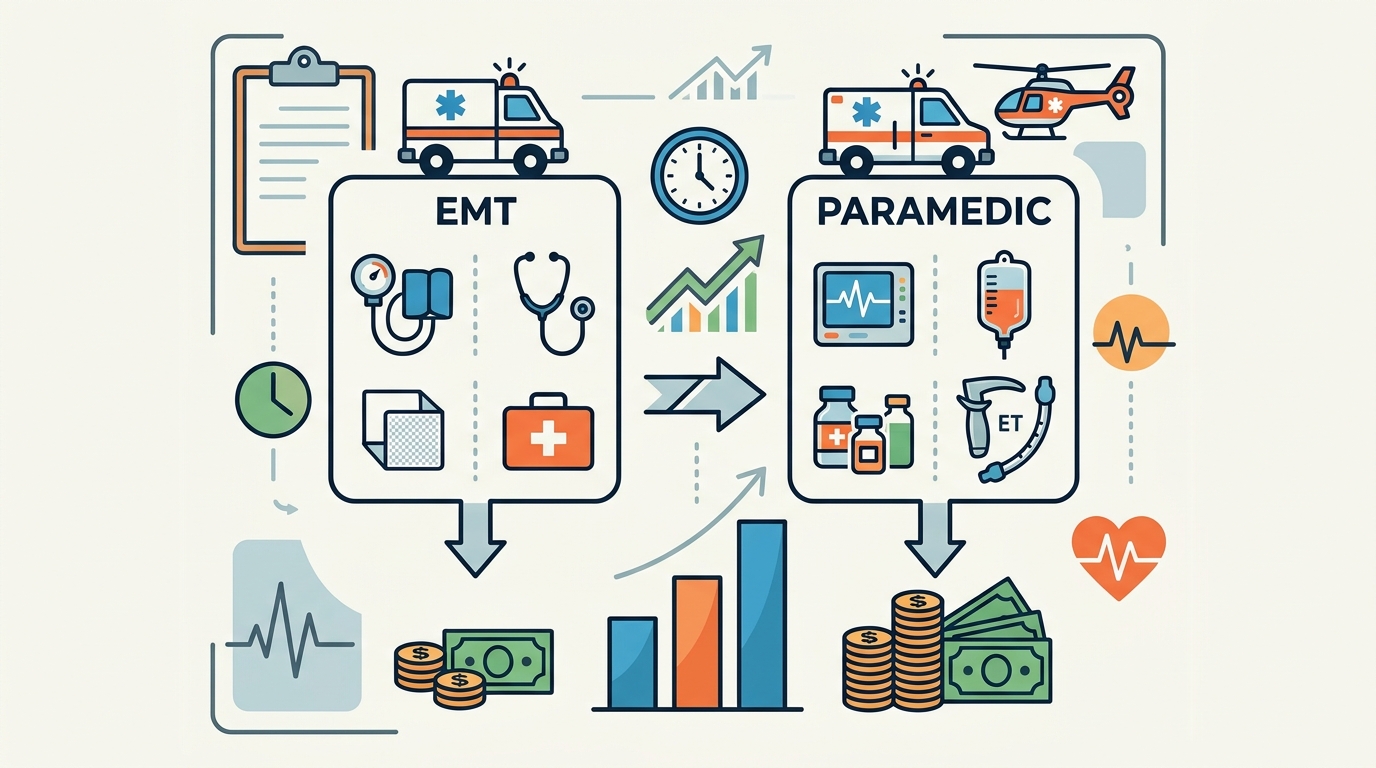
EMT vs. Paramedic Salary: Which Pays More?
Paramedic is the higher of the two certification levels, and paramedic roles generally pay more than EMT roles — how much more depends on employer type, your state's scope-of-practice rules, and how much overtime your schedule produces. The U.S. Bureau of Labor Statistics (BLS) reports a 2025 median pay of $48,150 for the combined "EMTs and Paramedics" occupation, and publishes the two jobs separately as SOC 29-2042 (Emergency Medical Technicians) and SOC 29-2043 (Paramedics) in its Occupational Employment and Wage Statistics (OEWS) program.
Desmond Okafor · 7 min read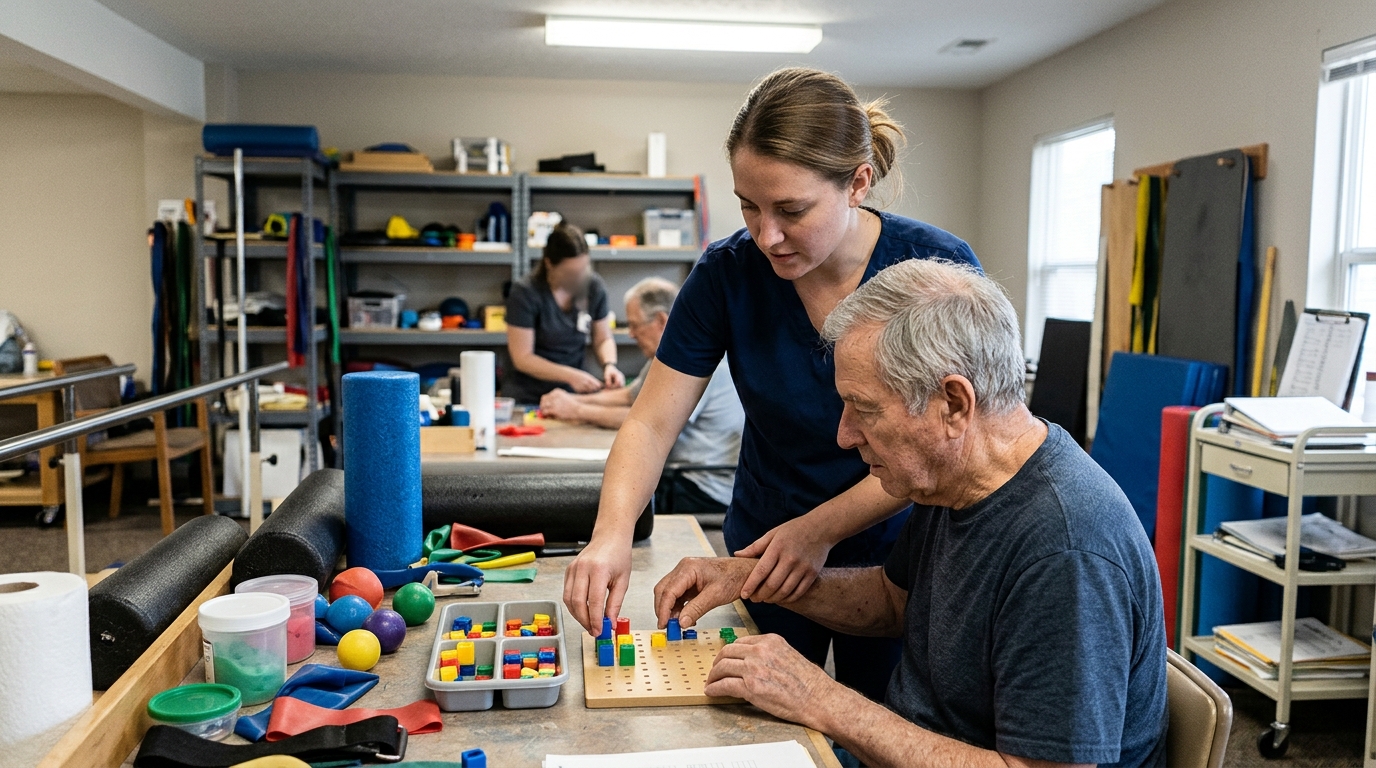
How to Switch to a Career in Occupational Therapy Assistant, Step by Step
Occupational therapy assistant is one of the more structured career switches available to someone already working. You need an associate's degree from an accredited occupational therapy assistant program, supervised fieldwork, and in most states a license that requires passing an exam (U.S. Bureau of Labor Statistics, 2025). As a planning range, budget 24 to 36 months from your first research phone call to your first paycheck in the new role; program length and your state's licensing processing drive the spread.
Marisol Tanaka-Reyes · 10 min read
Top 20 CNA Interview Questions and How to Answer Them
CNA interviews are short, practical and usually run by someone who works the floor. Expect a blend of clinical questions — transfers, vital signs, reporting a change in condition — and questions about handling residents, families and a shift that is down two aides; many CNA interview questions are designed to assess technical skills alongside interpersonal ability (Resume.co).
Priya Chandrasekaran · 7 min read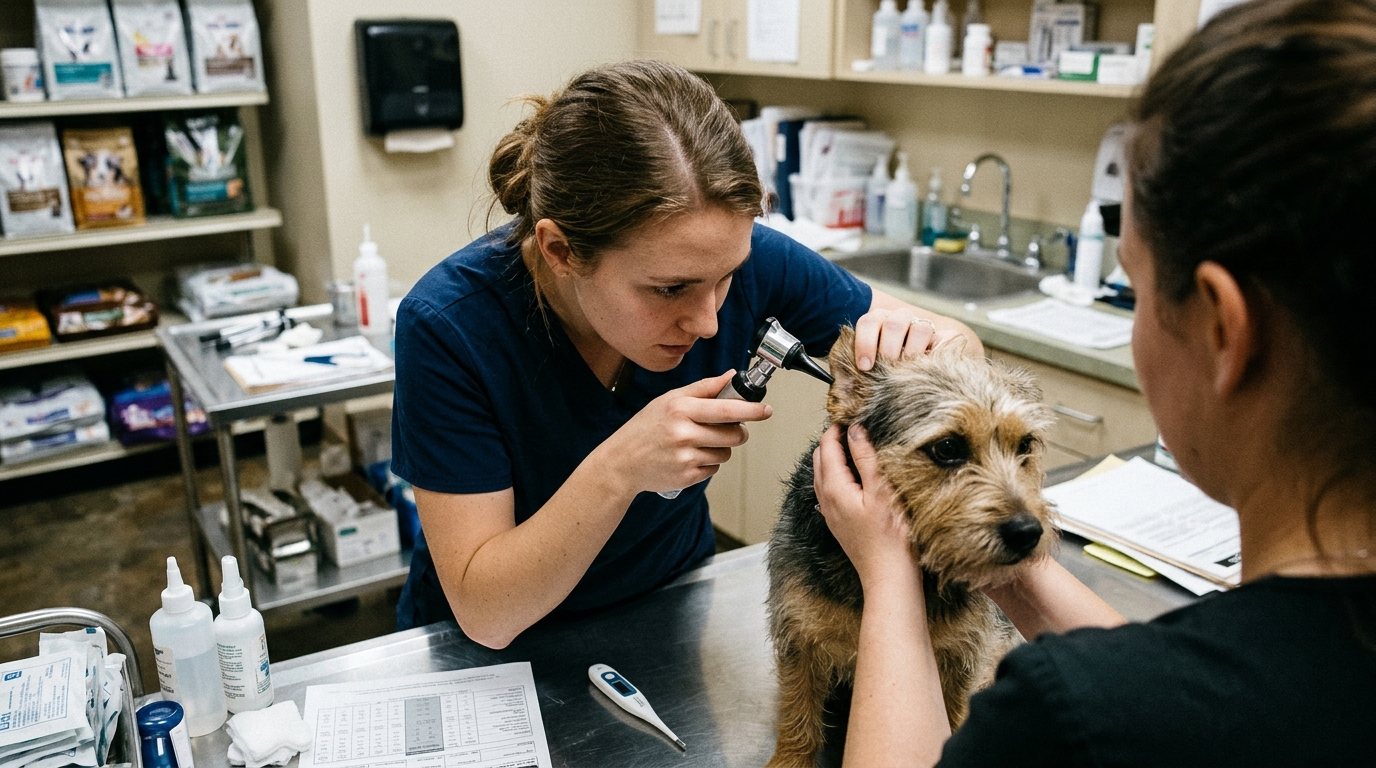
How to Become a Veterinary Technician
Veterinary technologists and technicians are the people who draw the blood, place the catheter, monitor the anaesthesia and run the lab samples while the veterinarian diagnoses and operates. The usual route is an associate's degree in a veterinary technology program for technicians and a bachelor's degree for technologists (U.S. Bureau of Labor Statistics, 2025), followed by a credentialing exam and registration, licensure or certification in the state where you work (U.S. Bureau of Labor Statistics, 2025).
Wyatt Holloway · 9 min read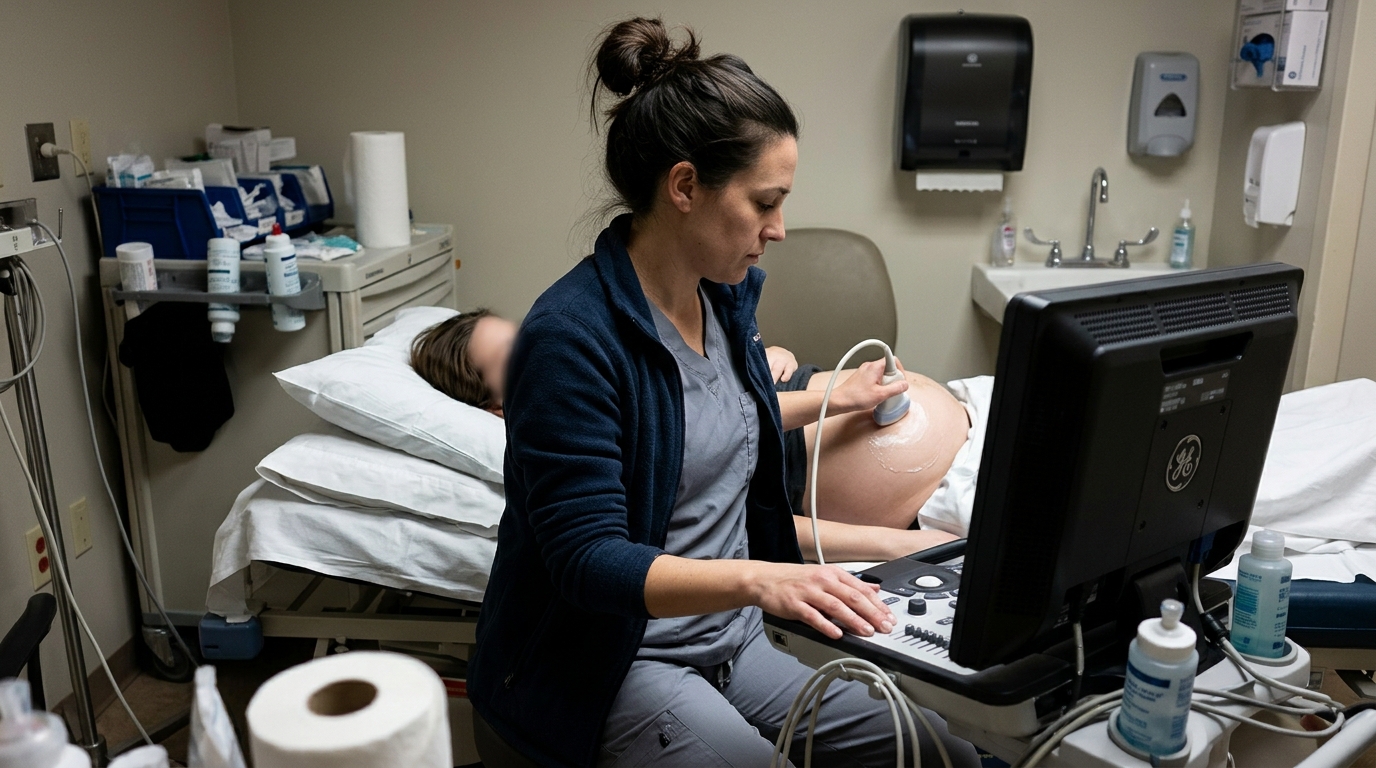
How to Become an Ultrasound Technician: Step-by-Step Guide
Becoming an ultrasound technician — formally a diagnostic medical sonographer, classified by ONET OnLine (U.S. Department of Labor, undated) under SOC code 29-2032.00 — usually means completing an accredited sonography program and then passing certification exams, most commonly through the American Registry for Diagnostic Medical Sonography (ARDMS). Most people enter through a two-year associate degree, though a shorter certificate route exists for those who already hold a healthcare credential.
Desmond Okafor · 8 min read
How to Write a Resume for a Truck Driving Job
A truck driving resume is a screening document, not a sales brochure. Carrier recruiters check license class, endorsements, equipment experience, miles driven, safety record and verifiable employment dates before they read any prose. Put those facts where they can be found in seconds, and attach a number to every claim.
Noor Abdallah · 7 min read
What Does a Logistics Coordinator Do? Duties, Skills, and Salary Explained
A logistics coordinator keeps goods moving: booking carriers, tracking shipments, directing the availability and allocation of materials, supplies, and finished products, and fixing the problems that stop a delivery from arriving on time (U.S. Bureau of Labor Statistics, 2025; ONET OnLine). Most of the work happens in enterprise resource planning software and spreadsheets, punctuated by phone calls with drivers, warehouse staff, and suppliers.
Noor Abdallah · 9 min read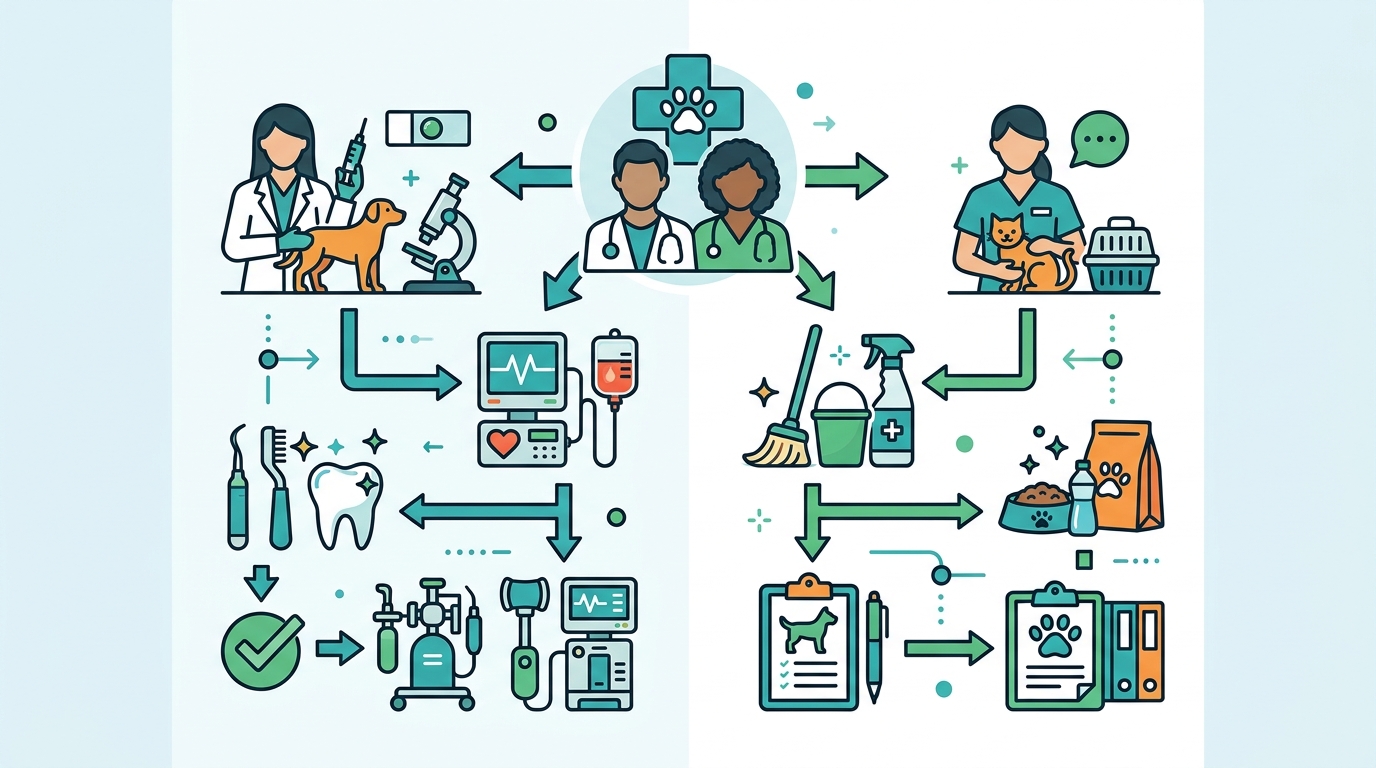
Veterinary Technician vs. Veterinary Assistant: Key Differences Explained
Veterinary technicians and veterinary assistants often work side by side in the same treatment room, but they are separate occupations with different entry routes, task lists and pay. Technicians typically complete a two-year accredited veterinary technology program and pass a credentialing exam, and handle clinical work such as anesthesia, radiographs and laboratory tests. Assistants usually enter with a high school diploma and short-term on-the-job training, focusing on animal care, restraint, cleaning and post-surgical monitoring.
Wyatt Holloway · 9 min read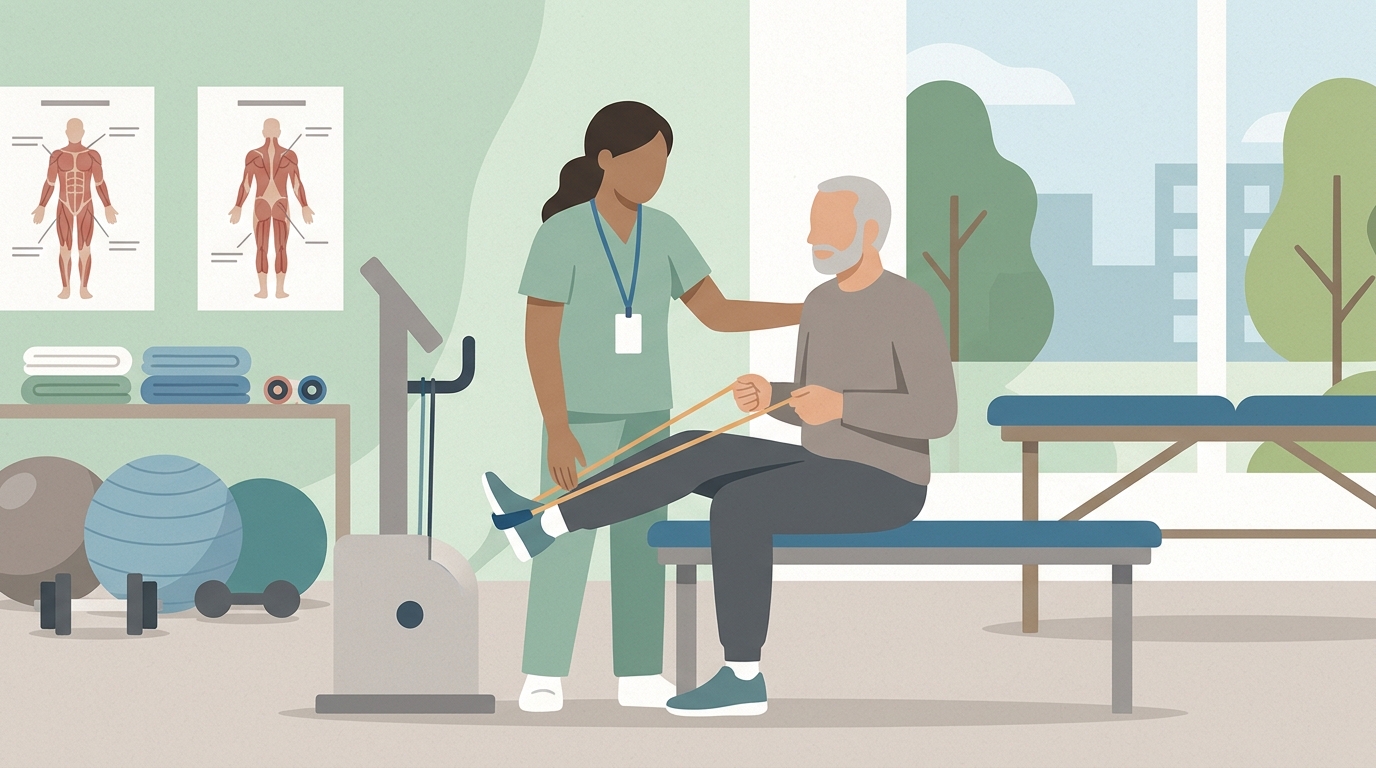
Is Becoming a Physical Therapist Assistant a Good Career Change?
Becoming a physical therapist assistant (PTA) is one of the shorter regulated routes into clinical healthcare: an associate's degree from an accredited program, a national exam, and a state license (U.S. Bureau of Labor Statistics, 2025). For a career changer that usually means two to three years from first prerequisite class to first paid shift, with a stretch of full-time, unpaid clinical rotations at the end.
Noor Abdallah · 9 min read