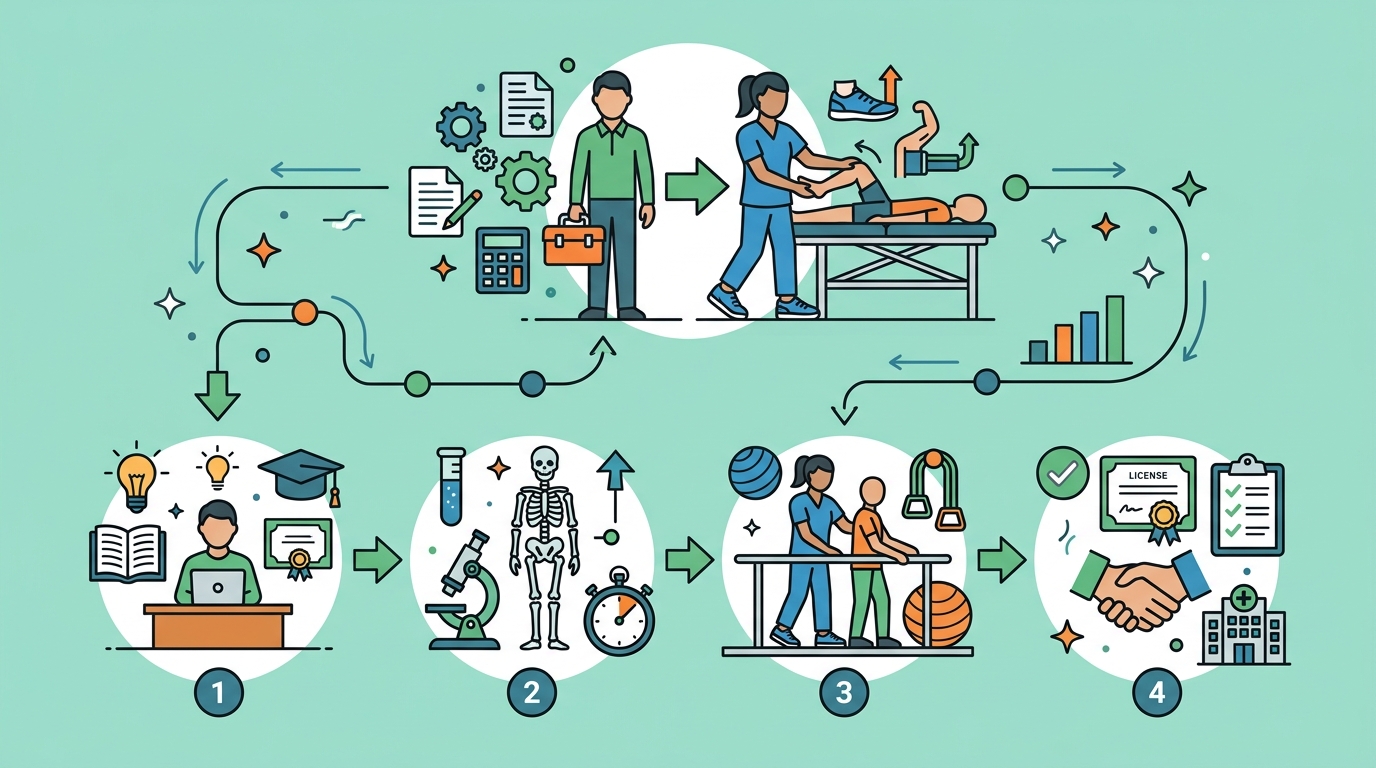
How to Become an Ultrasound Technician: Step-by-Step Guide
Scanning patients all day takes steady hands, real physical stamina and a credential most hiring managers look for before they read anything else.
Quick answer
- The usual minimum is an associate degree from a CAAHEP-accredited sonography program plus an ARDMS credential (the SPI exam plus one specialty exam); a four-year degree is not required for most entry-level roles.
- From first prerequisite class to a first staff sonographer job, plan on roughly 24 to 36 months full time; a certificate route for existing allied-health workers can run 12 to 18 months.
- Expect a real physical toll: sustained transducer pressure, awkward reaching and repetitive scanning make shoulder and wrist injuries a known hazard of the job.
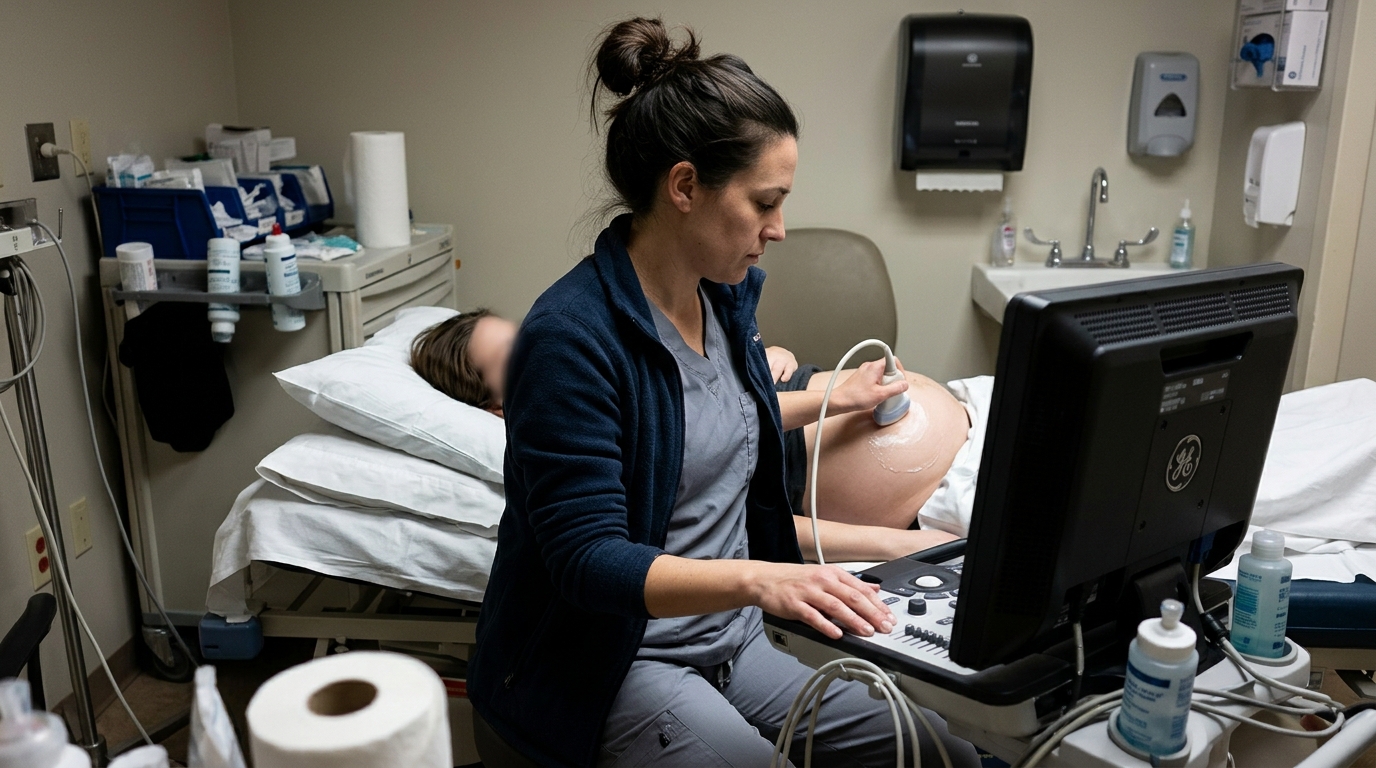
Becoming an ultrasound technician — formally a diagnostic medical sonographer, classified by O*NET OnLine (U.S. Department of Labor, undated) under SOC code 29-2032.00 — usually means completing an accredited sonography program and then passing certification exams, most commonly through the American Registry for Diagnostic Medical Sonography (ARDMS). Most people enter through a two-year associate degree, though a shorter certificate route exists for those who already hold a healthcare credential.
The work is hands-on and physically demanding: you stand or lean over patients for most of a shift, apply steady pressure with a transducer, and make judgement calls about image quality that a radiologist or cardiologist will rely on.
Step-by-Step Path to Entry
- Complete the prerequisite coursework. Nearly every sonography program requires anatomy and physiology with lab, college algebra or introductory physics, medical terminology, and often English composition. These are usually taken at a community college and take one to two semesters full time. Grades in anatomy and physics matter, because sonography admissions are commonly competitive and GPA-ranked.
- Apply to a CAAHEP-accredited sonography program. Accreditation by the Commission on Accreditation of Allied Health Education Programs (CAAHEP), on the recommendation of the Joint Review Committee on Education in Diagnostic Medical Sonography (JRC-DMS), is what makes you eligible for ARDMS certification by the standard route. Options include a two-year associate of applied science, a bachelor's degree in sonography, or a 12-to-18-month certificate for applicants who already hold a degree or an allied-health credential such as radiologic technology, nursing or respiratory therapy.
- Complete the supervised clinical practicum. Accredited programs place you in hospitals, imaging centres or clinics for hundreds of hours of scanning under a registered sonographer. These rotations are typically unpaid, scheduled during business hours, and mandatory for graduation — plan your finances and any outside job around them.
- Pass the ARDMS SPI exam. Sonography Principles and Instrumentation is the physics and instrumentation exam that underpins every ARDMS credential. Many programs have students sit it in the final year rather than after graduation.
- Pass a specialty exam to earn your credential. Abdomen (AB) or Obstetrics and Gynecology (OB/GYN) with SPI earns the Registered Diagnostic Medical Sonographer (RDMS); Adult Echocardiography (AE) earns the Registered Diagnostic Cardiac Sonographer (RDCS); Vascular Technology (VT) earns the Registered Vascular Technologist (RVT). Alternative bodies include the American Registry of Radiologic Technologists, which offers Sonography (S) and Vascular Sonography (VS) credentials, and Cardiovascular Credentialing International (CCI), which offers the RCS and RVS for cardiac and vascular work.
- Clear the non-academic requirements. Hospitals generally require a current Basic Life Support (BLS) provider card, a criminal background check, a drug screen, immunisation records including an annual influenza vaccine, and a TB screen. A small number of states regulate sonographers directly — check your state's health professions licensing board before you assume certification alone is enough.
- Apply for a named entry-level role. Look for postings titled Diagnostic Medical Sonographer I, Staff Sonographer, Echocardiography Technologist or PRN/per-diem Sonographer. Rural and community hospitals more often hire new graduates as generalists; large academic centres more often want a second specialty credential. Use the ONET description for SOC 29-2032.00 (ONET OnLine, U.S. Department of Labor, undated) to decode task lists in job ads.
Education and Certification Options
Tuition differs sharply between in-district community colleges, public universities and private schools, and exam fees are set by each certifying body. Check the program's published cost-of-attendance sheet and the current fee schedule on the ARDMS, ARRT or CCI website rather than relying on a figure quoted secondhand.
| Route | Typical duration | Where to check cost | Required or preferred |
|---|---|---|---|
| Associate of applied science, CAAHEP-accredited sonography | About 2 years full time after prerequisites | College tuition schedule; in-district vs out-of-district rates differ | The common minimum; widely accepted by employers |
| Bachelor's degree in diagnostic medical sonography | About 4 years including prerequisites | University cost-of-attendance page | Rarely required for staff roles; preferred for lead, education or management tracks |
| Post-secondary certificate for existing degree or allied-health credential holders | Roughly 12 to 18 months full time | Program tuition page; some hospital-based programs charge differently | Accepted when the program is CAAHEP-accredited and you meet the prerequisite credential |
| ARDMS SPI plus specialty exam (RDMS, RDCS or RVT) | Exams taken during or just after the program | ARDMS published application and exam fees | Required by most employers, often within 12 months of hire if not already held |
| ARRT Sonography (S) or Vascular Sonography (VS) | Add-on pathway, commonly for registered radiographers | ARRT fee schedule | An accepted alternative to ARDMS at many employers |
| CCI credentials (RCS, RVS) | Exams after qualifying education or clinical experience | CCI fee schedule | Common in cardiac and vascular labs specifically |
| BLS provider card | A half-day course, renewed every 2 years | Course provider; often free through an employer | Required for clinical placement and for hire |
Are You Ready? Readiness Checklist
Work through these before you pay a program deposit. Each one is something you can confirm now.
- You have completed, or can enrol in, anatomy and physiology with lab and a college-level algebra or physics course — the two prerequisites that most often block applicants.
- You have confirmed on the CAAHEP website that the specific program you are considering is accredited, and that its graduates are eligible to sit ARDMS exams.
- You can stand, lean and twist for most of an 8-to-12-hour shift, and push a portable ultrasound machine between patient rooms.
- You can apply firm, sustained pressure with a transducer using one arm in an abducted position without existing shoulder, wrist or back injury flaring up. Work-related musculoskeletal disorders are a recognised occupational hazard in sonography.
- You would pass a criminal background check and drug screen, and can produce immunisation records including MMR, varicella, hepatitis B and an annual influenza vaccine.
- You can go without full-time wages during unpaid clinical rotations, which are scheduled by the program and not by you.
- You are comfortable seeing distressing findings on screen — a fetal demise, a mass, a deep vein thrombosis — and holding a neutral expression while a patient watches your face.
- You have checked your state's health licensing board for any sonography-specific registration requirement, since rules differ by state.
- You have looked at current pay ranges for SOC 29-2032.00 in your metro area using the BLS Occupational Employment and Wage Statistics tables and local job postings, and found the figures workable; national figures and state figures differ.
Typical Timeline From Start to First Job
This assumes full-time study and no prior healthcare credential. If you already hold one, the certificate route compresses the middle stages considerably.
- Month 0–8: Prerequisites. Anatomy and physiology, algebra or physics, medical terminology. Request transcripts early and track each program's application deadline, which often falls a full year before classes begin.
- Month 6–12: Applications and waiting lists. Sonography cohorts are small and usually start once a year. Submit to more than one accredited program, and sit any required entrance test.
- Month 12–30: Accredited program coursework and labs. Scanning labs, cross-sectional anatomy, ultrasound physics, pathology and protocols, with scanning practice on classmates and phantoms.
- Month 18–30: Clinical rotations. Several rotations across hospital, outpatient and specialty settings, building a documented case log. This is where most job leads come from, so treat each rotation as an extended interview.
- Month 24–32: Certification exams. Sit the ARDMS SPI exam, then a specialty exam such as Abdomen, OB/GYN, Adult Echocardiography or Vascular Technology to earn the RDMS, RDCS or RVT.
- Month 26–36: First job as a Diagnostic Medical Sonographer I or staff sonographer. Expect to start on a rotating schedule that may include evenings, weekends or on-call shifts, and a supervised orientation period of several weeks before you scan independently.
Frequently asked questions
Can I become an ultrasound technician without a four-year degree?
Yes. The standard route is a two-year associate of applied science from a CAAHEP-accredited sonography program, followed by the ARDMS SPI exam and a specialty exam. If you already hold an allied-health credential such as radiologic technology or nursing, a 12-to-18-month accredited certificate is usually enough. Bachelor's degrees matter more for lead, educator or management roles.
Is certification legally required to work as a sonographer?
Most states do not license sonographers specifically, but most employers require an ARDMS, ARRT or CCI credential at hire or within about a year. A few states do regulate the profession, so check your state health professions licensing board directly. Treat certification as a practical requirement regardless of what your state law says.
How much do ultrasound technicians earn?
Pay is normally an hourly staff wage, with shift differentials for evenings, nights and weekends, plus on-call pay at hospitals that run after-hours scanning. Per-diem and travel roles pay a higher hourly rate without the same benefits. Check current figures for SOC 29-2032.00 in the BLS Occupational Employment and Wage Statistics tables and in local job postings, since state and metro rates differ.
Which specialty should I certify in first?
Abdomen and OB/GYN together produce the generalist profile that most hospitals and imaging centres hire for, and many new graduates pursue both. Adult Echocardiography leads to cardiac labs, Vascular Technology to vascular labs. Look at what employers within commuting distance actually advertise before choosing, because demand for each specialty is local.
What is the hardest part of the job day to day?
The physical strain. You hold a transducer with sustained pressure, often with your scanning arm raised and away from your body, and you reposition patients who cannot move themselves. Musculoskeletal injury to the shoulder, wrist and neck is a known occupational problem in sonography. Ergonomics training, machine adjustment and breaks between studies are not optional habits.
Sources
- O*NET OnLine (U.S. Department of Labor) — Summary Report for: Diagnostic Medical Sonographers

Written by
Desmond writes about the mechanics of job searching: resumes, interviews, the long silence after applying. He's fascinated by how much of getting hired depends on luck dressed up as skill.