How to Become a Personal Trainer
The work mixes coaching on a gym floor with scheduling, client retention and sales, and most employers want a certification and a current CPR card first.
Quick answer
- The minimum credential to practice is a personal training certification plus CPR/AED and first aid; the U.S. Bureau of Labor Statistics (2026-08-27) states trainers usually must be certified before working with clients or gym members.
- From a standing start to a first paid training job is realistically about 3 to 12 months if you take the certification route, and 2 to 4 years if you add an associate's or bachelor's degree that employers may prefer (U.S. Bureau of Labor Statistics, 2026-08-27).
- The tradeoff: hours cluster in early mornings, evenings and weekends, you spend most of the shift standing and demonstrating, and income usually depends on how many sessions you sell and keep.

To become a personal trainer in the United States, you normally need a personal training certification and a current CPR/AED credential before an employer will let you work with clients. The U.S. Bureau of Labor Statistics notes that personal trainers usually must be certified before they begin working with clients or gym members, and that most trainers or instructors also need certification in CPR and first aid and in the use of an AED (U.S. Bureau of Labor Statistics, 2026-08-27).
Most people get there through a self-study certification program rather than a degree, then start on a gym floor under a more experienced trainer. A college degree in exercise science or kinesiology is a preference at some employers, not a universal requirement.
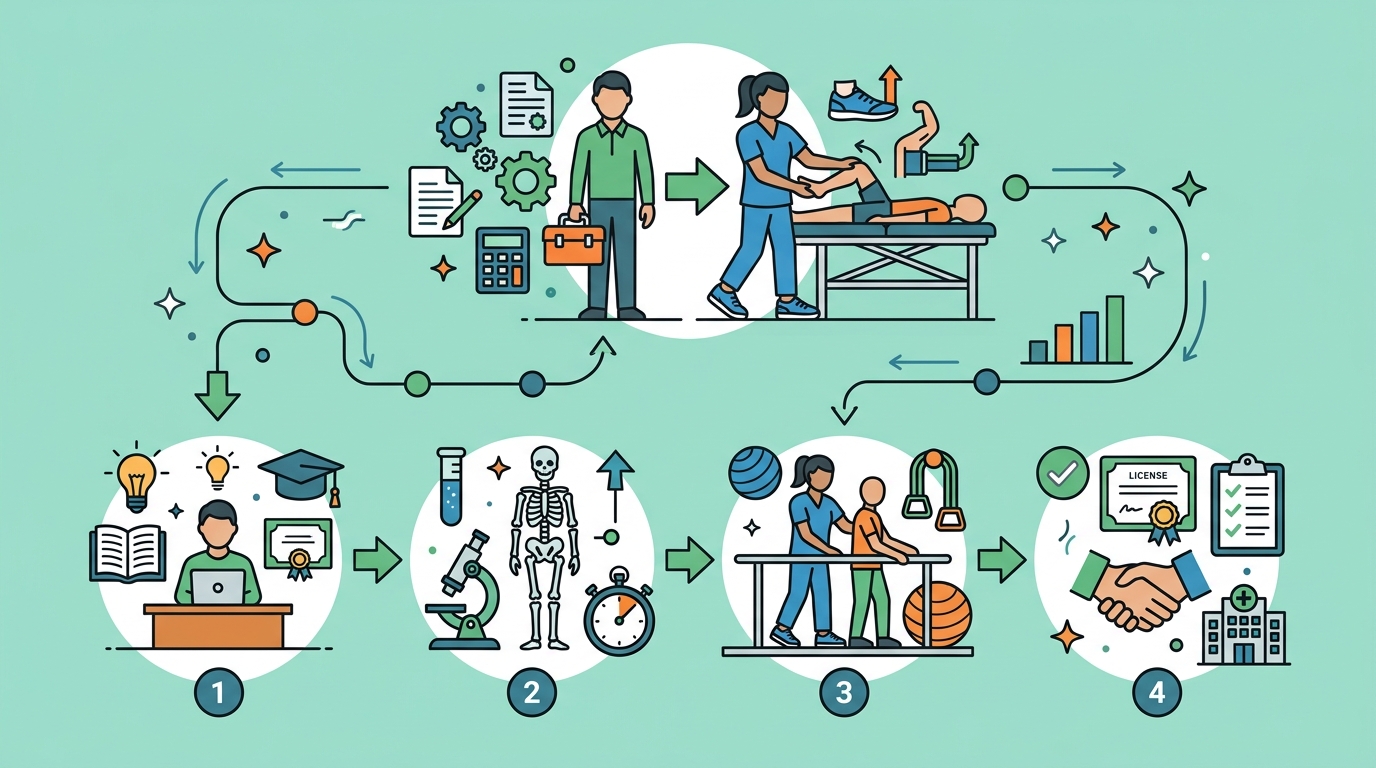
Step-by-Step Path to Entry
- Confirm you meet the certifying body's entry rules. NASM publishes entry requirements for its Certified Personal Trainer (NCCA) exam, the American Council on Exercise publishes eligibility requirements for the ACE Certified Personal Trainer exam, and the American College of Sports Medicine publishes qualifications for the ACSM Certified Personal Trainer. Read the current eligibility page for whichever one you pick before you pay for anything. The U.S. Bureau of Labor Statistics (2026-08-27) also lists the typical entry-level education and the work experience in a related occupation needed to enter this role — check both fields in its entry for fitness trainers and instructors.
- Get CPR/AED and first aid certified. Most trainers and instructors need certification in CPR and first aid and in use of an AED (U.S. Bureau of Labor Statistics, 2026-08-27). Note that starting in 2027, all ACSM certifications will require first aid training (American College of Sports Medicine, undated). These courses are short, in-person or blended, and expire — diary the renewal date.
- Pick a study program and work through it. ACE offers a self-paced Personal Trainer Study Program; its published typical length is the number to plan around (American Council on Exercise, undated). Decide early whether you want an NCCA-accredited credential — the ACE Personal Trainer Certification is accredited by the National Commission for Certifying Agencies (American Council on Exercise, undated) — or the separate ACE Personal Training Certificate, which ACE describes as non-proctored and non-accredited. Many gyms specify an NCCA-accredited certification in job ads, so check listings in your area first.
- Register for and pass the exam. Book a date, then study to it. ACSM publishes its CPT exam fees (American College of Sports Medicine, undated), and has stated that its certification exams will align with a new edition of its exercise guidelines (American College of Sports Medicine, 2025-07-10) — so confirm you are studying the current edition, not a used textbook from an older cycle.
- Apply for an entry-level gym floor role. Common first job titles are fitness attendant, gym floor associate, assistant personal trainer and group fitness assistant. ACE publishes the job roles its certified professionals may work in (American Council on Exercise, undated), which is a useful list for scanning job boards.
- Complete on-the-job training and mentored hours. The U.S. Bureau of Labor Statistics (2026-08-27) describes the on-the-job training typically received in this occupation and notes that after becoming certified, new trainers may be required to work alongside an experienced trainer before training clients alone. Expect to shadow sessions, run assessments under supervision and learn the employer's sales and retention process.
- Optional: add a degree or a specialization. Employers may prefer personal trainers with an associate's degree (typically about 2 years full time) or a bachelor's degree (typically about 4 years full time) in exercise science, kinesiology or physical education (U.S. Bureau of Labor Statistics, 2026-08-27). Specialty credentials in areas such as corrective exercise, nutrition coaching or youth fitness come from the same certifying bodies.
Education and Certification Options
Costs change every year and most providers run periodic promotions, so treat the published fee page of each body as the only reliable source. Where a fee is published — ACSM publishes its CPT exam fees (American College of Sports Medicine, undated) — read it directly rather than relying on a third-party summary.
| Route | Typical duration | Approximate cost | Required or preferred |
|---|---|---|---|
| NCCA-accredited personal training certification (for example the NASM Certified Personal Trainer NCCA exam, the ACE Certified Personal Trainer exam, or the ACSM Certified Personal Trainer) | Self-paced study program; ACE publishes a typical length for its Personal Trainer Study Program (American Council on Exercise, undated) | Study package plus exam fee; check each body's published fee page, such as ACSM's CPT exam fees (American College of Sports Medicine, undated) | Effectively required — the U.S. Bureau of Labor Statistics (2026-08-27) states personal trainers usually must be certified before working with clients or gym members |
| Non-accredited certificate (for example the ACE Personal Training Certificate, which ACE describes as non-proctored and non-accredited) | Shorter than the proctored route; see ACE's course page | Check ACE's published price | Accepted by some employers only; many job ads specify NCCA accreditation, so verify before enrolling |
| CPR, first aid and AED certification | Typically one short course, often a single day or a blended online plus in-person session | Varies by local training provider; check providers in your city | Required by most employers (U.S. Bureau of Labor Statistics, 2026-08-27); ACSM certifications will require first aid training starting in 2027 (American College of Sports Medicine, undated) |
| Associate's degree in exercise science, kinesiology or physical education | About 2 years full time at a community college | Published per-credit tuition at the college; in-state and out-of-state rates differ | Preferred by some employers, not generally required (U.S. Bureau of Labor Statistics, 2026-08-27) |
| Bachelor's degree in exercise science, kinesiology or physical education | About 4 years full time | Published tuition at the institution; varies by state and by public versus private | Preferred by some employers; usually expected if you later move into clinical, collegiate or corporate wellness roles |
| Mentored on-floor hours with an experienced trainer | Weeks to months, set by the employer | Paid or unpaid depending on the employer | Commonly required internally — new trainers may have to work alongside an experienced trainer before training clients alone (U.S. Bureau of Labor Statistics, 2026-08-27) |
State rules differ on business licensing if you train independently, and employers differ on which certifying bodies they accept. Check your state's requirements for operating as a sole proprietor or contractor before you take private clients.
Are You Ready? Readiness Checklist
Work through these before you spend money on a study program.
- You hold a high school diploma or GED, or you have confirmed in writing what your chosen body requires — NASM, ACE and ACSM each publish their own eligibility rules for their CPT exams.
- You meet the minimum age and prerequisite conditions on the eligibility page of the specific exam you intend to sit, not a general summary of the industry.
- You have a current CPR/AED and first aid certification, or a course booked, since most trainers and instructors need it (U.S. Bureau of Labor Statistics, 2026-08-27).
- You can pass an employer background check. Commercial gyms and anywhere working with minors commonly run one; ask the employer what they screen for.
- You can stand, demonstrate exercises, spot loaded barbells and lift and reset equipment for most of a shift, repeatedly, across consecutive days.
- You can work split shifts — early mornings before clients' workdays, then evenings and weekends — and accept that midday is often dead time.
- You are comfortable with the sales and retention side: booking consultations, asking for the sale, following up on lapsed clients and losing income when a client stops showing up.
- You have checked current pay for fitness trainers and instructors in your state in the BLS Occupational Employment and Wage Statistics data, and you understand pay is usually structured as a per-session rate, a share of session revenue, or a low base plus commission rather than a flat salary.
Typical Timeline From Start to First Job
This assumes the certification route rather than a degree. Add roughly 2 years for an associate's degree or 4 years for a bachelor's if you take that path.
- Month 0: Compare the NASM Certified Personal Trainer (NCCA) exam, the ACE Certified Personal Trainer exam and the ACSM Certified Personal Trainer against local job ads, confirm eligibility on each body's page, and book a CPR/AED and first aid course.
- Month 0-1: Complete CPR/AED and first aid. Enroll in a study program — for example the self-paced ACE Personal Trainer Study Program, whose typical length ACE publishes (American Council on Exercise, undated).
- Month 1-5: Study and sit practice exams. Confirm you are using the current edition of the material, since ACSM has said its certification exams will align with a new edition of its exercise guidelines (American College of Sports Medicine, 2025-07-10).
- Month 3-6: Register for and pass the certification exam. Start applying immediately — gyms often hire for the floor before you finish, on condition of passing.
- Month 4-8: Start as a fitness attendant, gym floor associate or assistant trainer and complete the employer's on-the-job training. Expect to work alongside an experienced trainer before training clients alone (U.S. Bureau of Labor Statistics, 2026-08-27).
- Month 6-12: Move onto the schedule as a Certified Personal Trainer with your own client roster, typically after passing an internal assessment and completing a set number of shadowed sessions.
For demand, read the BLS projected job outlook for fitness trainers and instructors for 2025-35 and its count of jobs held in 2025 (U.S. Bureau of Labor Statistics, 2026-08-27) rather than relying on gym marketing claims. Both figures are national; local hiring depends on how many gyms, studios and corporate wellness programs operate near you.
Frequently asked questions
Can I become a personal trainer without a four-year degree?
Yes. The standard route is a personal training certification rather than a degree — for example the NASM Certified Personal Trainer (NCCA) exam, the ACE Certified Personal Trainer exam or the ACSM Certified Personal Trainer — plus CPR/AED and first aid. A degree in exercise science, kinesiology or physical education is something employers may prefer (U.S. Bureau of Labor Statistics, 2026-08-27), not a universal requirement.
Does the certification have to be accredited?
Many employers specify an NCCA-accredited credential. The ACE Personal Trainer Certification is accredited by the National Commission for Certifying Agencies (American Council on Exercise, undated). ACE separately offers a Personal Training Certificate that it describes as non-proctored and non-accredited. Read job ads in your area first — if they name accreditation, the cheaper non-accredited option will not get you shortlisted.
How is personal trainer pay usually structured?
Most gym-employed trainers earn a per-session rate, a percentage of session revenue, or a modest base plus commission on packages sold, rather than a flat salary. Independent trainers set their own session rates and carry their own costs. For current figures, check the BLS Occupational Employment and Wage Statistics data for fitness trainers and instructors in your state, since state and metro pay differ from national numbers.
Do I need experience before I get certified?
Usually not, though the U.S. Bureau of Labor Statistics (2026-08-27) lists the work experience in a related occupation needed to enter this role — check that field directly. More practically, employers expect supervised hours after certification: new trainers may be required to work alongside an experienced trainer before training clients alone (U.S. Bureau of Labor Statistics, 2026-08-27).
What is the hardest part of the job to prepare for?
The schedule and the client retention side. Sessions cluster in early mornings, evenings and weekends with dead hours between, and your income usually tracks how many clients you book and keep. You also spend most of a shift on your feet demonstrating movements, spotting lifts and resetting equipment, which is physically demanding across consecutive days.
Sources
- U.S. Bureau of Labor Statistics — Fitness Trainers and Instructors : Occupational Outlook Handbook (2026-08-27)
- NASM (National Academy of Sports Medicine) — Are there any prerequisites for the NASM Certified Personal Trainer (NCCA) Exam?

Written by
Priya tracks wages, layoffs, and the slow shifts in what counts as a stable job. She writes for readers trying to make sense of numbers that rarely match their own experience.