
Changing Careers
Changing Careers guides on Job Scout Wise.
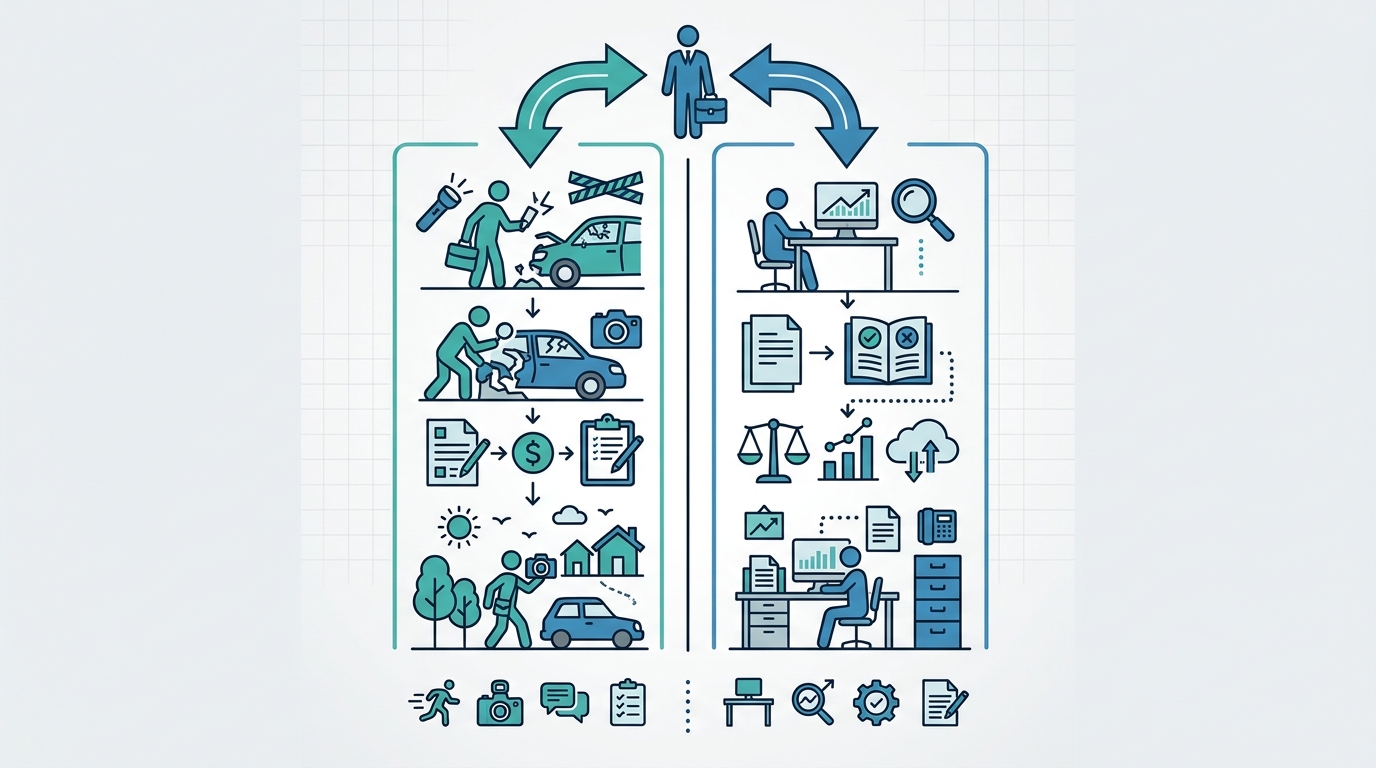
Claims Adjuster vs. Underwriter: A Second-Career Comparison
Claims adjusting and underwriting sit on opposite sides of the same insurance policy, and they suit different career changers. Adjusting is usually the faster door to walk through — a high school diploma or equivalent is typically enough for entry-level work, though some roles want a bachelor's degree or insurance-related experience (U.S. Bureau of Labor Statistics, 2025). Underwriting typically asks for a bachelor's degree and pays a higher median wage.
Priya Chandrasekaran · 8 min read
Switching Careers to Flight Attendant: What You Need to Know
Switching into flight attendant work later in your career is realistic: airlines hire on customer service experience rather than degrees, and training is provided after you are hired. The U.S. Bureau of Labor Statistics (2025) reports flight attendants typically need a high school diploma or equivalent plus one or two years of service work in restaurants, hotels or resorts, with initial airline training lasting several weeks to a few months.
Wyatt Holloway · 9 min read
So You Want to Become a Financial Advisor After 30
Becoming a financial advisor in your thirties, forties or fifties is a normal route into the job. The U.S. Bureau of Labor Statistics (2025) says typical entry-level education is a bachelor's degree in no particular field, and that work experience in a related occupation is not typically required — what is required is long-term on-the-job training under senior advisors, usually lasting more than a year.
Desmond Okafor · 10 min read
How to Switch to a Career in Occupational Therapy Assistant, Step by Step
Occupational therapy assistant is one of the more structured career switches available to someone already working. You need an associate's degree from an accredited occupational therapy assistant program, supervised fieldwork, and in most states a license that requires passing an exam (U.S. Bureau of Labor Statistics, 2025). As a planning range, budget 24 to 36 months from your first research phone call to your first paycheck in the new role; program length and your state's licensing processing drive the spread.
Marisol Tanaka-Reyes · 10 min read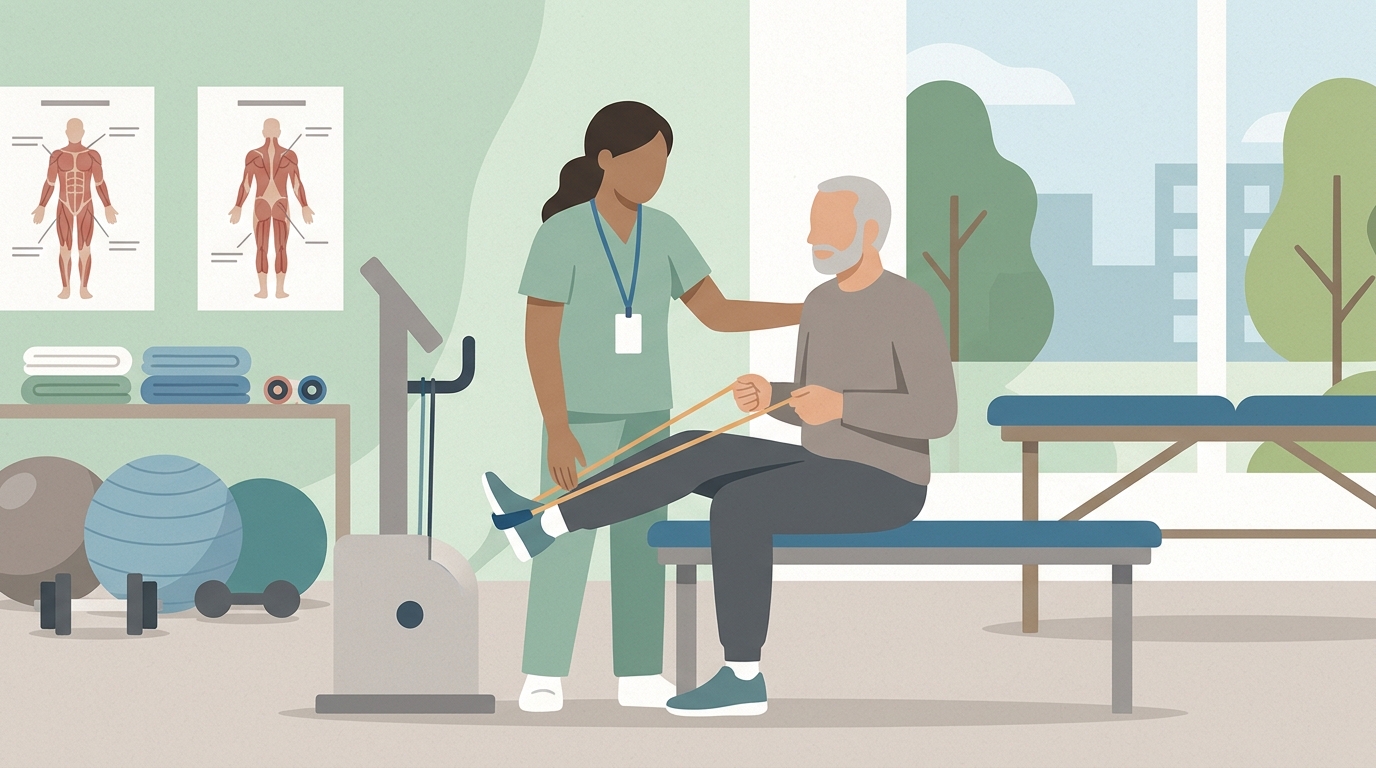
Is Becoming a Physical Therapist Assistant a Good Career Change?
Becoming a physical therapist assistant (PTA) is one of the shorter regulated routes into clinical healthcare: an associate's degree from an accredited program, a national exam, and a state license (U.S. Bureau of Labor Statistics, 2025). For a career changer that usually means two to three years from first prerequisite class to first paid shift, with a stretch of full-time, unpaid clinical rotations at the end.
Noor Abdallah · 9 min read